Tom Chi has said the idea came to him while he watched the reefs near his home in Hawaii fall apart. He is an engineer. He was a founding member of Google X, he has shipped software, search and self-driving cars, and today he invests in deep tech through At One Ventures, a fund built around making humanity net positive to nature. So when the reef started to die, he did what an engineer does. He built a machine.
The first one was a coral planting robot, paid for by a grant from the National Science Foundation. In a podcast in December 2020 he said the whole robot cost less than $3,800. It became Reefgen. Chi says he founded it and was its original electrical engineer. Today Reefgen builds robots that plant live coral back onto reefs and seagrass back into meadows, and the same method works for red mangroves. In his TED talk in 2025 he said one robot planted 10,000 seagrass seeds in a single day, an entire underwater acre.
I think this is what grief looks like for an engineer. Other people write, march or donate. An engineer goes to the workshop. I understand that completely, because it is what I would do too.
This piece is about the next step. The step after the robot works.
The reflex
The robot became a company. That is the normal path, and it is a rational one. Reefgen's planter mechanisms are patented. It does not ship a robot with a manual. In the words of a December 2025 article in The Invading Sea, "Reefgen delivers outcomes." A client sets a target, say a number of acres to restore, and Reefgen brings the trained operators and the robots and does the work.
There are good reasons for this. Venture money needs ownership, because a fund has to return the fund. A patent is how you prove to an investor that a competitor cannot copy you next year. Selling outcomes instead of machines means the people who understand the robot are the ones who run it, and the client pays for living plants, not for hardware that sits in a shed. Every founder I know would make the same choices, and most investors would insist on them.
I am not criticising Chi for this. I am criticising the reflex, the one most of us have, that the right container for a good machine is a company that owns it.
The problem with the reflex
Seagrass, mangroves and coral are not failing in one place. They are failing on thousands of coastlines at the same time, in countries rich and poor, in bays nobody outside the next village has heard of.
A company that sells restoration as a service reaches the coasts that can pay for it. That means government programmes, offset buyers, large NGOs, wealthy coastal towns. It does not mean the fishing village in Sulawesi whose seagrass is gone and whose fish went with it. It cannot mean that village, because the village is not a market, and a company that serves non-markets for long stops being a company.
So the model does exactly what it was designed to do. It grows as fast as capital lets it grow. The question is whether capital will ever reach far enough. I don't think it will. Not because investors are bad, but because the damage is spread thin and the money is concentrated.
The counter-case
There is a group that faced the same kind of problem from the other side, and made the opposite choice.
Injection molding is how most of the plastic things around us are made. Bottle caps, toys, kitchen utensils, the housing of your phone charger. In a video from November 2026, Precious Plastic explains that industrial injection machines "cost the same as a house". And the molds that go into them easily cost tens of thousands of euros.
So almost nobody can recycle plastic into new products. Not because the plastic can't be recycled, but because nobody has the machine. And if you own a machine that expensive, you do not want to feed it dirty, mixed, recycled plastic that might slow it down or break it.
Precious Plastic, a project started by the designer Dave Hakkens, set out to build a recycling machine anyone could own. They did not want, in their words, "to end up with a 100K machine, so we had to change something."
What they changed was time.
An industrial injection machine makes a part in under 30 seconds. That is what it is optimised for, and that speed is what you are paying for. Precious Plastic asked a simple question. Why does a plastic part need to be made in 30 seconds? A wooden chair takes days. A ceramic cup spends hours in a kiln. Nobody expects either to come out in seconds.
Once they let go of speed, everything else could go too. No hydraulics, no motors. A hand press where all the force comes from a long lever. Parts made from standard steel pipe and plumbing fittings that you can buy almost anywhere in the world. The material for the machine costs about €350, by their own estimate for the Netherlands. It melts the plastic in five to ten minutes instead of seconds.
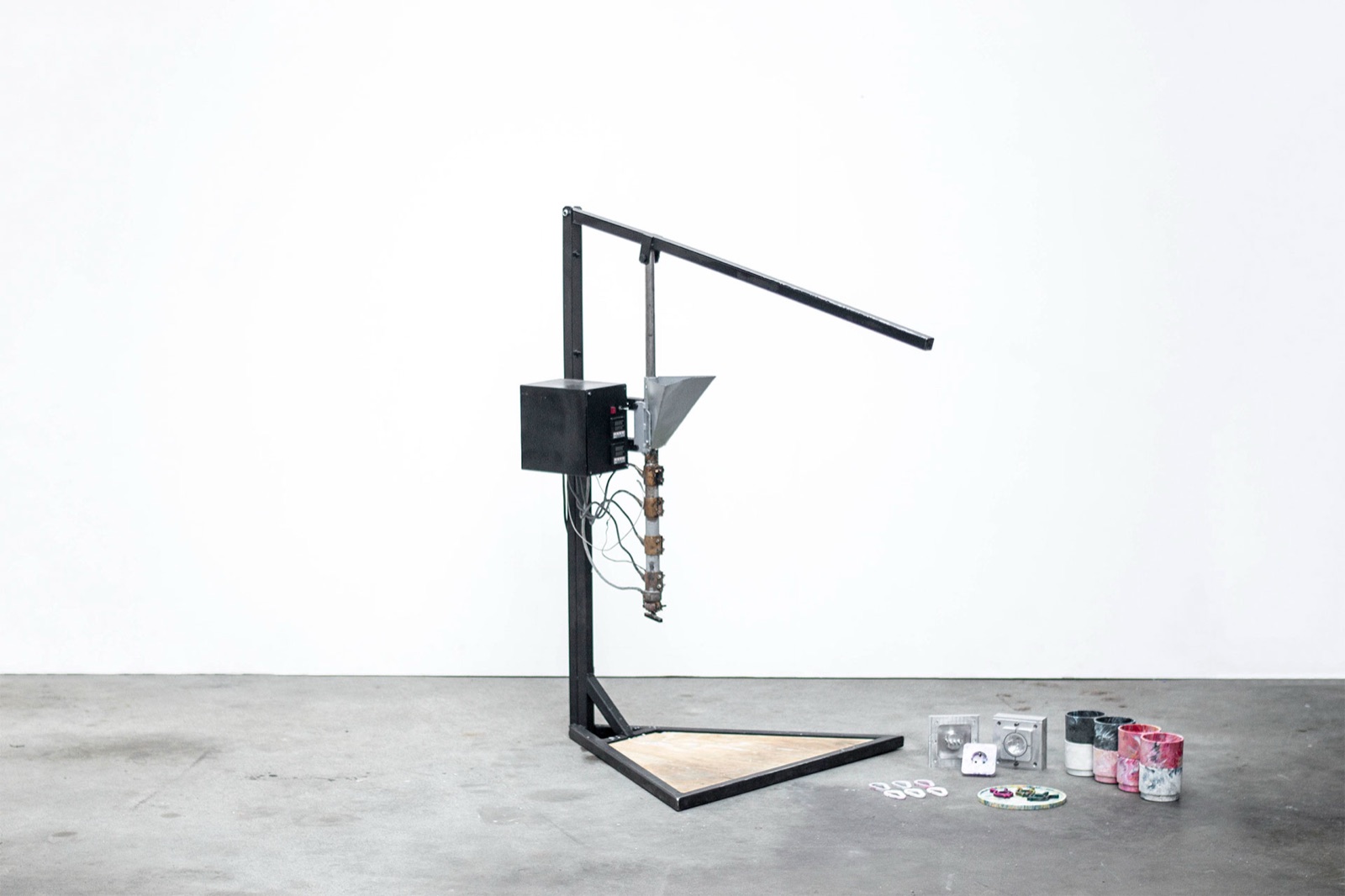
Then they did the part that matters for this piece. They put the drawings, the 3D models and the step-by-step build videos online, for free, for anyone. The machine was first designed in 2013 and released open source in 2016. The work is paid for by members, from €7 a month.
Today their website counts about 1,100 workspaces recycling plastic in 56 countries. People in Spain built a mobile workshop that makes custom sunglasses on the spot, in under 30 minutes. A workspace in Germany makes clothespins from one material, so they are easier to recycle again. A group in Australia molds pens.
And the community kept improving the machine itself. The sunglasses team needed more pressure, so they added a wheel mechanism that many others then copied. Some built bigger versions. Some built desktop versions. Someone built one that melts the plastic with sunlight. Precious Plastic says it plainly: "many of these machines are much better than our original design."
That sentence is the whole argument. A company's machine is as good as the company. A blueprint gets better every time someone builds it.
The price of a machine is a decision
Here is the lesson I take from Precious Plastic. The industrial machine is not expensive because injection molding is expensive. It is expensive because industry decided that a part must take 30 seconds. Drop that requirement, and the cost falls with it.
The price of a machine reflects a constraint somebody chose. Most of the time nobody remembers choosing it.
And here is the thing that surprised me when I went back to Chi's TED talk. He already knows this. He already did it. He said that when he talked to people about the underwater robot he wanted to build, they told him: "You should budget like $2 million for the robot." He was thinking more like $5,000. Reefgen's robot ended up at about $10,000. In his own words, "the whole point is you want this to be an accessible technology to all the communities that have nearshore ecosystems to restore."
That is the Precious Plastic move. Chi refused the expensive constraint and took the price down by a factor of two hundred. He did the hard engineering half.
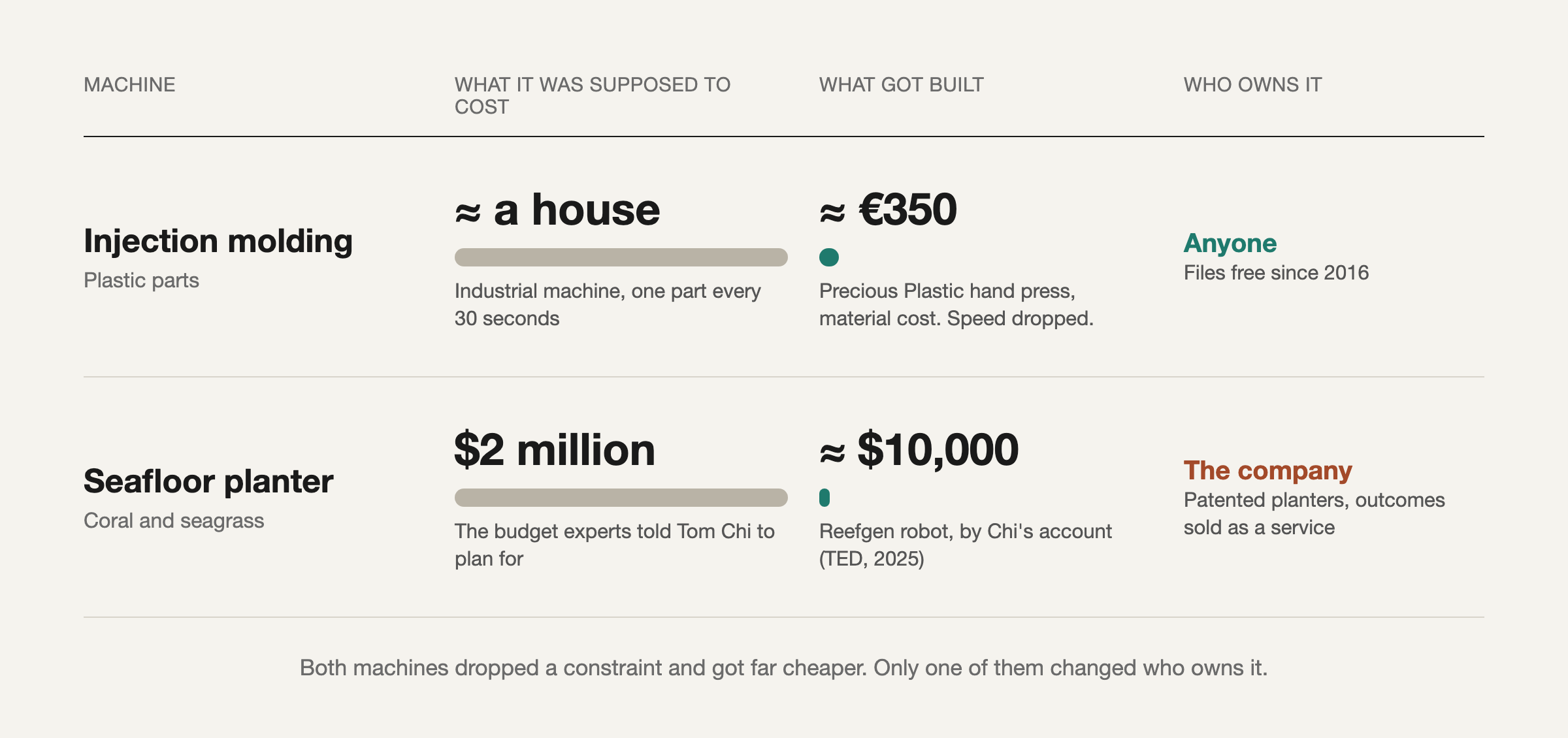
What he did not change is who owns the result. In the same talk he gives the scale argument: a single billionaire could spend $50 million and have a fleet of 10,000 robots. That is real scale. But it is one billionaire's fleet. The other path to 10,000 robots is 10,000 communities building their own.
The keychain years
I don't want to make open hardware sound easy, because it isn't.
Precious Plastic is honest about this too. When the machine first spread, most of what people made were small things. Keychains, souvenirs. "Lots of useless things to be honest," they say in the video. It was nice that they came from plastic waste. It did not replace much new plastic.
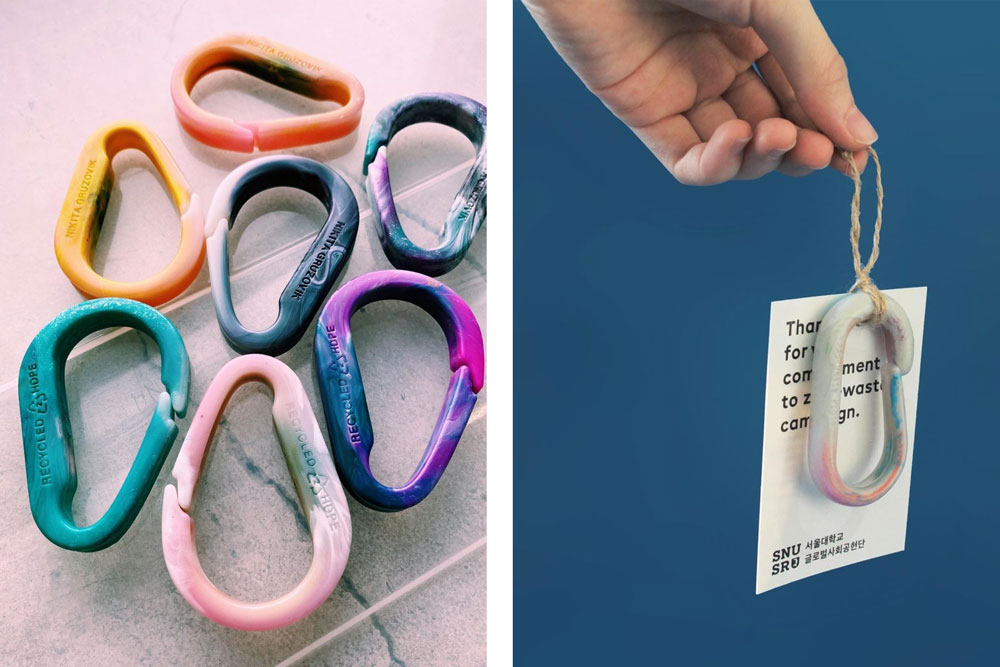
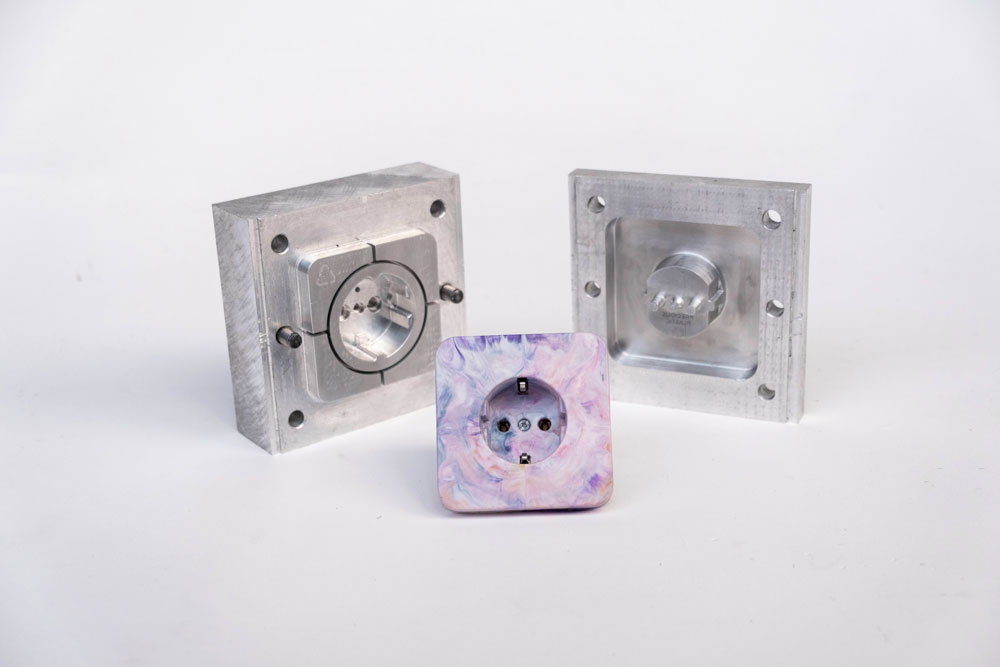
The breakthrough was not the machine. It was the molds. Around the same time, desktop CNC machines got cheaper and better, and more of them were open source. Suddenly the community could cut accurate aluminium molds. Threads that fit a bottle cap. Several parts in one mold. Buckles from South Korea that actually click. And then an electrical socket, the most boring object in your house, always made from new plastic, now made from waste.
So open hardware has a slow middle. Years where the output looks like trinkets and critics say the model doesn't work. The bottleneck is usually not the main machine. It is the tooling around it. Anyone who wants to publish a restoration robot as a blueprint should expect the same: years of small, clumsy results before the community learns the hard parts.
The strongest case for Reefgen's model
If I want Chi to take this seriously, I have to take his side seriously too. So here are the best arguments against everything I just wrote.
Accountability. Reefgen sells outcomes. Reefgen's leadership told The Invading Sea it sees 80 percent or higher survival for seagrass shoots. That is the company's figure, and the point is that somebody is answerable for it. In a commons, when the plants die, nobody is.
Real constraints. A lever press is not an underwater robot. Some of Reefgen's cost is not a choice at all. Salt water eats electronics. Pressure, currents and visibility are real. Precision placement on a seafloor is hard. You can drop speed from a plastic press. You cannot drop corrosion from the ocean.
Biology. Bad restoration can damage a site. Planting needs permits, the right species, the right seed source, and years of monitoring. A blueprint gives you a machine. It does not give you a marine biologist. Reefgen's own team says it: "You need both deep robotics and deep biology."
Funding. €7 memberships pay for the development of a manual press. Robotics research costs far more. Somebody has to pay for the years of failed prototypes, and today that somebody is venture capital.
Inevitability. Even Precious Plastic doesn't claim it invented small-scale recycling. They say someone else would have figured it out along the way, and that open source "accelerated everything". So the honest claim for an open restoration robot is acceleration, not invention.
I think all five are right. None of them, to me, is an argument for owning the planter. They are arguments for owning the parts that need a company.
So here is a hybrid, and it is my proposal, not something Reefgen has said. Open the planter mechanism and every part that can be built locally. Keep the company for what a commons is bad at: mapping the sites, monitoring the plants, verifying the results, and standing behind the survival numbers. The robot spreads like a blueprint. The trust stays with someone who can be held to account.
Capital is not the scarce thing
The funding objection is the one I take most seriously, so it is worth looking at someone who has both the money and the doubts.
Albert Wenger is a partner at Union Square Ventures, so he knows exactly how venture capital works. In his book The World After Capital he argues that "society is no longer held back by a scarcity of capital." The scarce thing now is attention. He wrote the book in the open, on GitHub, so anyone could read it and improve it while he worked on it.
He and his wife Gigi Danziger did not leave it at a book. In the Hudson Valley in upstate New York they built a small set of projects, and they apply steward ownership to them. Steward ownership means the company is run for its purpose, and profit is a means, not something to be extracted. The Spark of Hudson is a community learning hub in a three-storey building in town, with workshops that range from home energy to local business. HudsonUP, which The Spark started with Humanity Forward in 2020, gave 25 residents $500 a month for five years, and later grew. HudsonDots is an affordable housing programme. Wally Farms is a 1,000-acre working landscape in Columbia County with a farm accelerator and a lab for regenerative agriculture.
Look at that list as an engineer and it is close to what a coast would need. A place where people learn to build. Money that reaches people directly. Land where new methods get tested. None of it had to return a fund. It had to work for Hudson.
They are honest that it is not easy. In a 2025 interview they talk about community distrust and legal complexity as the two things that slow them down. Both are real, and both would show up on any coast too.
Still, the lesson for me is pretty simple. Capital can pay for a thing without fencing it in. And if attention is the scarce resource, the people on a dying coast already have the most important input. They are there every day. They see which bay lost its seagrass and when. They are the ones who will repair the machine when it breaks, if somebody lets them.
Where this goes
This is what we are working toward with Heliogenesis. We call the idea MIRACLE Factories. Small local workshops where the people closest to the damage build the tools, adapt them to their own coast, and repair them themselves. The designs are shared. The improvements flow back. It is the Precious Plastic model, applied to the machines that heal ecosystems instead of the machines that recycle plastic.
It is easier to say what that means with one place in mind.
Take a bay where the seagrass is gone. Near the harbour there is a shed. On one bench people build a seagrass planter from open files. The frame, the hopper and the planting head are cut and molded right there. The motors, the batteries and the electronics are bought off the shelf, so anyone can replace them. On a second bench there is a hand press and a small desktop CNC that cuts the molds, the same tools that took Precious Plastic from keychains to sockets. In the back there are a few tanks where material grows.
The people in the shed are the ones who already know the bay. Fishers who can tell you where the meadow was twenty years ago. Two or three technicians who learned to build and fix the planter over a few months. A marine biologist who comes by, or calls in, to decide what gets planted where and with which seeds. When the planter breaks, it gets fixed that week, on the beach, not shipped back to a company on another continent.
And every fix, every failure and every survival count goes back into a shared library. If the shed finds a better way to keep sand out of the planting head, the next shed starts with it. That is how the Precious Plastic presses got better than the original, and it is the part a company cannot copy, because it only happens when many people build the same thing in many places.
There is one more step I keep thinking about. Precious Plastic made the machine cheap, but the machine still needs plastic. So the next question is not the press. It is the material that goes into it.
Anne Meyer's lab at the University of Rochester grows materials with bacteria. In 2019 they made an artificial mother-of-pearl. One strain of bacteria lays down calcium carbonate, another lays down a polymer, layer after layer. It came out as tough as natural nacre, and it needed no expensive equipment, no high temperature, no high pressure and no toxic chemicals. In 2021 they printed living algae onto bacterial cellulose, a sheet that bacteria grow themselves, and got a tough material that is biodegradable and simple to scale up.
Put that next to a hand press and you get the idea we are working on at Heliogenesis. A mold that is filled with a grown material instead of melted plastic, with local fibres for the body and bacteria to make it strong. Those are the tanks in the back of the shed. And calcium carbonate happens to be what a reef is made of, so the same method that makes a part for the planter might one day make the base a coral grows on. None of this is a product today. But it is the same move Precious Plastic made, one level deeper. Drop the assumption that a part has to come from oil, in thirty seconds, in a factory far away.
To be clear about where this is today: it is an idea and a plan, not a shed with a robot in it. The next step is one first site, one bay and one machine built from open files. Precious Plastic took years to get from the first press to the socket mold. We are at the beginning of that road.
The question
So I want to end with a question, and I mean it as an invitation, not a challenge.
What would Reefgen look like as a blueprint?
I think it could look something like this. Reefgen publishes the planter. The CAD files, the parts list, the firmware and a build guide, the way Precious Plastic did. A fishing cooperative, a university or a school can build one, and the cost is mostly parts and time.
Reefgen keeps everything a commons is bad at, and gets paid for it. Surveying a site before anyone plants. Knowing which species and which seed source fit which bay. Training operators. And above all, measuring what survives and standing behind the number, because the government or the buyer who pays for restoration needs someone they can hold to account. For the teams who would rather not build, Reefgen still sells a finished robot.
The interesting part is what that does to the business. Today every robot Reefgen does not build is a robot it does not sell. As a blueprint, every robot someone else builds is a new site that needs mapping, training and verified survival data, and new field data that makes Reefgen's biology better. The patent stops being the moat. The trust and the data become the moat. And the work reaches the coasts that could never pay for a service.
What if ten thousand bays did this
Now zoom out, because one robot is not the point.
In his TED talk Chi said a single billionaire could buy a fleet of 10,000 robots for $50 million. I think that is true, and I would be glad if one did. But there is a second way to get to 10,000 robots. Ten thousand bays each build one. On paper it is the same number. In practice it is a very different world.
The first thing that changes is repair. A fleet is maintained by the company that owns it, from wherever the company is. A network is maintained by the people standing next to the machine. A robot that breaks in a bay with its own shed is back in the water the same week.
The second thing that changes is how fast everyone learns. Albert Wenger describes how new knowledge comes about with what he calls the knowledge loop, "in which someone learns something and creates something new, which is then shared and in turn serves as the basis for more learning." Each shed is one turn of that loop. Ten thousand sheds are the loop turning ten thousand times in parallel. A planting head that jams in Wales teaches a shed in Sulawesi what to change. A seed mix that fails in one estuary saves the next estuary a season. And every bay that counts its surviving plants adds to a public record of what actually works in restoration, at a scale nobody has today. Wenger is blunt about where this loop breaks: "patents limit our ability to use knowledge to create something new." A patented planter can still be a very good machine. It just cannot be part of the loop.
The third thing that changes is the material. With the grown materials from Meyer's lab and others, a shed needs sunlight, local feedstock and bacteria, and it can make many of its own parts. The motors and chips still come from far away, and I don't want to pretend otherwise. But the bulk of the machine, and maybe one day the reef base it plants on, can come from the place itself. That is what we mean at Heliogenesis by material independence. Not a region cut off from the world. A region that can make what it needs to heal itself from what it already has.
And the fourth thing that changes is what is scarce. Wenger's whole book rests on one claim: capital is now sufficient, and the scarce thing is attention. He writes that "markets fail at allocating attention because prices cannot exist for directing our attention." In a world of ten thousand sheds you can see what he means. The machine is cheap. The files are free. What nobody can buy is a fisher who has watched one bay for twenty years and knows where the meadow used to be. In this world that person is the most valuable part of the system. Their knowledge cannot be patented. It can only be paid attention to.
Wenger has been writing on Mondays about philosophy, and in one of his latest pieces he makes an argument about consciousness that I keep coming back to. "Only the fish has access to what it feels like to be that fish," so its own choices are a better guide to its good than decisions made for it from outside. He is writing about minds and AI, not about reefs. But I think it holds for places too. The people who live with a bay have access to something no company and no investor ever will. A model where they build and decide, and the company verifies, respects that. A model where a service arrives from outside does not.
In the same piece he writes that "access to knowledge comes with a moral obligation." He means it for any agent that can know what is right. I read it as an engineer. If you know how to build the machine that plants a reef, and most of the world does not, that knowledge is not only an asset. It is also a responsibility to the coasts you will never reach on your own.
None of this is a utopia, and Wenger does not pretend it is either. He writes that "some problems require centralization to be solved." That is exactly why the verification, the biology and the safety rules should stay with someone who can be held to account. Engineered bacteria need containment. Planting needs permits. Some sheds will fail, some bays will not recover, and the first robots still have to be paid for by someone. But the question changes. It stops being "who can afford to restore this coast?" and becomes "who lives here, and wants to?" There are far more of the second than the first.
That, to me, is what a world after capital looks like when you apply it to physical things. Not a world without money or companies. A world where the scarce thing is care and attention, and the tools are free to anyone who has them.
Back to one robot
Tom, you already did the hardest part. You were told to budget $2 million, you built the robot for $10,000, and you did it because you wanted every coastal community to have one. The last constraint left is who owns it.
So the question I would really like to ask you is a practical one. What would it take to publish the planter?
Sources
- Precious Plastic, We made plastic recycling possible for anyone. The results are insane, video, November 2026
- Precious Plastic, preciousplastic.com (workspaces, countries, membership)
- One Army, The Injection machine (history, material cost). Photos in this piece: Precious Plastic / One Army, CC BY
- Tom Chi, The army of autonomous robots restoring nature, TED, 2025
- Y on Earth, Episode 94 with Tom Chi, December 2020 (NSF grant, robot cost)
- The Invading Sea, How Reefgen's seafloor robots aim to restore coasts, December 2025 (patents, outcome model, survival figure)
- CNN, Robots are helping restore lost seagrass meadows
- Albert Wenger, The World After Capital (knowledge loop, patents, attention, decentralization)
- Albert Wenger, Philosophy Mondays: Knowledge and Consciousness, Continuations, November 2026
- CTVC, Interview with Albert Wenger, December 2020
- University of Rochester, Artificial nacre made with bacteria, April 2019
- University of Rochester, Will your future clothes be made of algae?, April 2021
- The Ownership Economy, Episode 083 with Gigi Danziger and Albert Wenger, August 2025 (steward ownership in the Hudson Valley)
- Eutopia, About the founders
- HudsonUP, Who created HudsonUP?
- Jain Family Institute, HudsonUP reports
- Wally Farms, wallyfarms.com