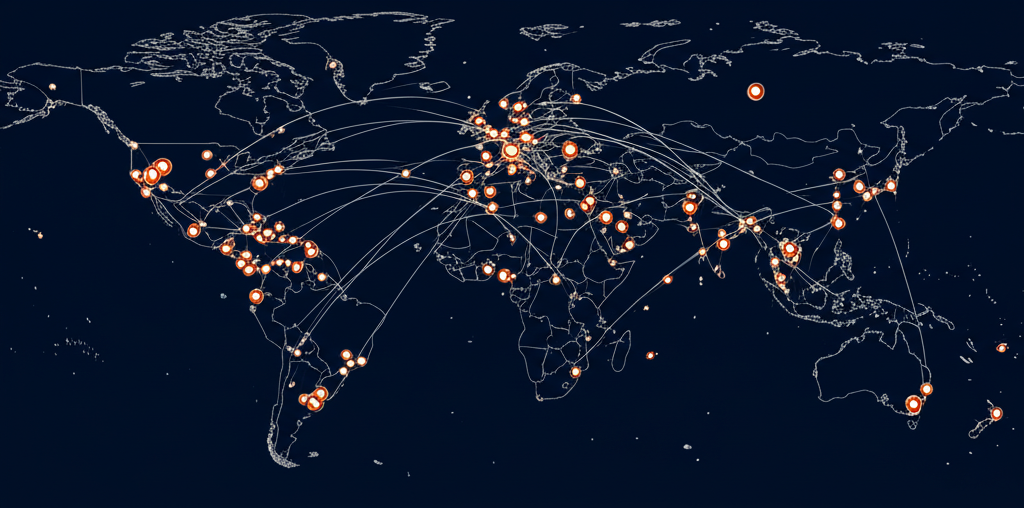
There is more activity in molten salt and thorium reactor development right now than at any point since the 1960s. State programs in China and India are spending billions. A dozen private companies across North America and Europe are building designs. Investors are beginning to pay attention.
But the landscape is fragmented, underfunded relative to the scale of the opportunity, and geographically lopsided. The state programs have patience and scale but move slowly by Western standards. The startups have innovation but lack capital and regulatory pathways. And the continent that needs this technology most - Europe - has the fewest companies building it.
This is a map of who is building what, how far along they are, and where the gaps exist.
State-backed programs
China: SINAP/CAS - the clear global leader
The Shanghai Institute of Applied Physics (SINAP), operating under the Chinese Academy of Sciences, runs the world's most advanced thorium MSR program.
What they have built:
- TMSR-LF1: 2 MW experimental thorium molten salt reactor, operational since 2023 in the Gobi Desert
- Dedicated research campus with ~700 scientists and engineers
- Over $3.3 billion invested since 2011
- Comprehensive materials testing program (modified Hastelloy-N, SiC composites)
- Domestic FLiBe salt production capability
- Growing Li-7 enrichment capacity
What they are planning:
- TMSR-LF2: 373 MW commercial-scale reactor, targeted for early 2030s
- Factory-produced modular units for mass deployment
- Full online reprocessing capability at commercial scale
Why they are ahead: State-directed funding with no electoral cycle interruptions. Vertical integration across the supply chain - China controls thorium reserves (Bayan Obo), rare earth processing, growing Li-7 production, and domestic Hastelloy-N development. 700 researchers working on nothing else for 15 years creates institutional depth that money alone cannot buy quickly.
Strategic intent: China is not building a reactor. It is building the technology that the rest of the world will eventually need to license. The TMSR program is an export strategy as much as an energy strategy.
India: BARC - the 70-year bet
India's thorium program is older than China's but less advanced in MSR-specific technology. It is, however, the most strategically committed thorium program on earth.
What they have built:
- KAMINI: the only reactor in the world currently operating on U-233 fuel (at Kalpakkam)
- Advanced Heavy Water Reactor (AHWR): 300 MWe design using thorium, approved for construction
- Prototype Fast Breeder Reactor (PFBR): plutonium-fueled fast reactor at Kalpakkam, the bridge to thorium in India's three-stage programme
- 70 years of thorium fuel cycle research at BARC (Bhabha Atomic Research Centre)
- Extensive thorium processing capabilities from monazite sand
What they are planning:
- Stage 3 of Bhabha's three-stage nuclear programme: full transition to thorium-based reactors
- Thorium MSR research (less advanced than China's but building on deep fuel cycle knowledge)
- Commercial AHWR deployment as an intermediate step
Why they matter: India holds the world's largest thorium reserves (846,000 tonnes). The entire Indian nuclear strategy since 1954 has been designed around eventually running on domestic thorium fuel. No other country has this depth of institutional commitment. India's nuclear engineers are trained on thorium chemistry from the beginning of their careers.
Limitation: India's nuclear program is slower than China's due to less concentrated funding, democratic process overhead, and international isolation during the NSG embargo years (1974-2008). The PFBR has experienced significant delays. But the strategic direction is unwavering.
Indonesia: early interest
Indonesia has announced interest in thorium MSR for island power - the archipelago has 17,000 islands, many without grid connection, making small modular reactors attractive. ThorCon (see below) is specifically targeting Indonesian deployment. Indonesia has thorium reserves and a growing energy demand that makes MSR technology strategically interesting.
Maturity: very early stage. Policy interest without significant domestic R&D capability.
Private companies: MSR designs
Terrestrial Energy (Canada) - furthest in Western licensing
Design: IMSR (Integral Molten Salt Reactor), 195 MWe Fuel: Low-enriched uranium (not thorium) dissolved in fluoride salt Status: Most advanced Western MSR in regulatory process. Completed multiple phases of CNSC (Canadian Nuclear Safety Commission) pre-licensing review. Funding: Over $100 million raised Approach: Conservative - uses proven uranium fuel cycle rather than thorium breeding, focuses on commercial viability over technical ambition
Assessment: The most likely Western MSR to reach licensing first. Pragmatic approach - solving the "is an MSR licensable?" question before tackling the harder thorium fuel cycle. If they succeed, they prove the regulatory pathway that every other MSR developer needs.
Limitation: Uranium fuel, not thorium. Does not capture the waste reduction, fuel abundance, or breeding advantages of the thorium cycle. A stepping stone, not the destination.
Moltex Energy (UK/Canada) - the waste burner
Design: SSR (Stable Salt Reactor), a hybrid - molten salt fuel sealed inside fuel tubes (combining liquid fuel chemistry with solid fuel handling) Fuel: Designed to burn spent fuel from existing reactors (waste-to-energy for nuclear waste) Status: Pre-licensing engagement with CNSC. Developing site at Point Lepreau, New Brunswick. Funding: Significant Canadian government support plus private investment
Assessment: Clever market positioning. The nuclear waste problem is political and real. A reactor that consumes spent fuel while generating electricity addresses two problems simultaneously. The hybrid approach (salt in tubes) may be easier to license than flowing liquid fuel because it is closer to existing regulatory frameworks.
Limitation: The hybrid design sacrifices some of the advantages of true liquid fuel MSRs (no continuous online reprocessing, no drain-to-safe freeze plug mechanism in the same form). Commercial viability depends on spent fuel supply contracts - a business model dependency as much as a technology one.
Flibe Energy (US) - the thorium purist
Design: LFTR (Liquid Fluoride Thorium Reactor), true thorium breeding MSR Fuel: Thorium with online breeding of U-233 Status: Early stage. Design and analysis phase. Not yet in formal pre-licensing. Funding: Smaller, earlier stage than Terrestrial Energy or Kairos Power Founded by: Kirk Sorensen, one of the original thorium advocacy voices who helped reignite modern interest in MSR technology
Assessment: The closest to the "ideal" thorium MSR design - full liquid fuel, thorium breeding, online reprocessing. If Flibe Energy succeeds, they build the reactor that captures all the theoretical advantages. The challenge is that they are tackling the hardest version of the technology with the least capital.
Limitation: Underfunded relative to the technical ambition. The thorium breeding cycle with online reprocessing is the most complex MSR configuration. Needs significantly more capital and a regulatory pathway that does not yet exist in the US.
Copenhagen Atomics (Denmark) - the mass manufacturer
Design: Modular thorium MSR designed for shipping container-scale deployment Fuel: Thorium with breeding capability Status: Active development, salt loop testing, building toward prototype Funding: Venture-backed, growing
Assessment: Bold approach to the manufacturing problem. If you can build a reactor that fits in a shipping container and manufacture them in a factory like industrial equipment, you change the cost curve entirely. The shipping container constraint forces design simplicity, which may be an advantage for licensing.
Limitation: European regulatory environment is harder than North American for novel nuclear. Denmark has no nuclear regulator (Denmark has no nuclear power). Would need to license in another EU country. The gap between salt loop testing and a licensed reactor is enormous.
Seaborg Technologies (Denmark) - the floating reactor
Design: Compact MSR on a barge (CMSR - Compact Molten Salt Reactor) Fuel: Uranium-based molten salt Status: Design phase, exploring deployment partnerships in Southeast Asia Funding: Venture-backed
Assessment: Interesting deployment model. Floating nuclear power plants solve the siting problem - build in a shipyard, tow to location, connect to grid, tow away for decommissioning. South Korea and Russia have built floating nuclear concepts (Russia's Akademik Lomonosov). Applying this to MSRs is logical.
Limitation: Maritime nuclear licensing adds complexity to an already complex regulatory challenge. Potential customers (developing nations) may lack the regulatory infrastructure to oversee floating nuclear plants. Deployment pathway is unclear.
Kairos Power (US) - the well-funded neighbor
Design: KP-FHR (Fluoride-salt-cooled High-temperature Reactor), uses TRISO solid fuel with fluoride salt coolant Fuel: Solid TRISO fuel particles (not dissolved in salt) Status: Most well-funded advanced reactor startup in the world. Hermes test reactor under construction in Oak Ridge, Tennessee. Google PPA (Power Purchase Agreement) announced. Funding: Over $600 million raised
Assessment: Kairos is not building an MSR in the traditional sense - the fuel is solid, not liquid. But they use fluoride salt as coolant, which means they are solving many of the same materials and salt chemistry challenges (Hastelloy compatibility, salt purification, high-temperature heat exchange). Their success validates fluoride salt technology for the entire MSR field.
Strategic significance: The Google PPA gives Kairos a creditworthy offtake agreement - a business model anchor that most nuclear startups lack. If Hermes operates successfully, it de-risks fluoride salt technology for everyone.
Limitation: Not a thorium reactor. Not a breeder. Does not capture the waste or fuel abundance advantages of the thorium cycle. But it is building operational experience with fluoride salt systems that the entire field needs.
ThorCon (US/Indonesia) - the shipyard reactor
Design: MSR designed to be built in shipyards using shipbuilding techniques Fuel: Uranium-based molten salt (thorium capability in later versions) Status: Targeting deployment in Indonesia. Design and partnership development phase. Key insight: Nuclear construction costs are 10-20x higher per tonne of steel than shipbuilding. Build reactors like ships and costs drop dramatically.
Assessment: The manufacturing insight is correct and important. If nuclear reactors could be built with shipyard productivity and quality control, the economics transform. Indonesia is a smart target market - growing demand, island geography suits distributed power, regulatory environment is developing.
Limitation: Building a reactor in a shipyard requires a regulator willing to license that approach. Neither the US NRC nor any established nuclear regulator has a framework for shipyard-built reactors. The Indonesian regulatory pathway is uncertain.
The gap analysis: what is missing
Gap 1: European MSR developer
There is no serious European-headquartered MSR developer at commercial scale. Copenhagen Atomics and Seaborg are Danish but early-stage and small. Nothing exists at scale in France, Germany, Czech Republic, or anywhere else in the EU.
This is remarkable given that Europe has the most acute need for the technology (energy cost crisis, deindustrialization, climate targets), the strongest nuclear engineering tradition (France), and significant public capital available through Euratom and national development banks.
The gap exists because European venture capital avoids nuclear (too long, too regulated, too complex), European governments have not created an MSR-specific development programme, and the anti-nuclear political sentiment in Germany and Austria has created a chilling effect across the continent.
This is the single most important gap in the global landscape. Whoever fills it captures the European energy market.
Gap 2: Supply chain companies
Almost all attention goes to reactor developers. Almost none goes to the supply chain companies that reactor developers need:
- Li-7 enrichment: Zero Western commercial production. Russia and China control the market. A Western Li-7 enrichment company is arguably more strategically important than any individual reactor developer.
- Hastelloy-N manufacturing at nuclear grade: Only Haynes International (US) and VDM Metals (Germany) produce it. Neither at the scale a commercial MSR fleet would require.
- FLiBe salt production: Laboratory-scale only in the West. No commercial supplier exists.
- Online reprocessing equipment: Nobody makes the bismuth contactors, fluorination systems, or salt processing equipment that MSR reprocessing requires at any scale.
- MSR-specific instrumentation: Sensors, monitors, and control systems for 700-degree radioactive fluoride salt service. Largely custom/experimental.
The supply chain companies are less glamorous than reactor developers but potentially more valuable. Every MSR developer needs the same materials. Owning the supply chain means owning a piece of every reactor built.
Gap 3: Licensing specialists
Companies that help MSR developers navigate nuclear regulatory frameworks across multiple jurisdictions barely exist. The few nuclear licensing consultancies focus on PWR technology. MSR-specific regulatory expertise is concentrated in a handful of individuals globally.
A firm specializing in MSR licensing - helping developers prepare safety cases, training regulators, facilitating multi-country licensing pathways - would have every MSR developer as a potential client.
Gap 4: Thorium fuel cycle companies
Almost every Western MSR startup uses uranium, not thorium. This is pragmatic - uranium is a known fuel cycle, easier to license, lower technical risk. But it means nobody in the West is seriously commercializing the thorium breeding cycle that delivers the real long-term advantages: 300-year waste instead of 100,000-year waste, fuel abundance, and near-complete resource independence.
Flibe Energy and Copenhagen Atomics are exceptions, but both are early-stage. The thorium fuel cycle commercialization gap is the most significant technology gap in the Western landscape.
The funding landscape
Total private investment in MSR and thorium reactor companies globally: estimated $2-3 billion.
For context:
- Fusion startups have raised over $6 billion (for technology decades further from commercialization)
- Global conventional nuclear industry: hundreds of billions per year
- Offshore wind investment: EUR 30-40 billion per year in Europe alone
- The entire MSR field has raised less than a single large offshore wind farm costs
Key investors
- Breakthrough Energy Ventures (Bill Gates): invested in multiple advanced nuclear concepts
- Khosla Ventures: early nuclear investor
- Google: PPA with Kairos Power (demand signal, not equity investment, but equally important)
- Canadian government: significant funding for Terrestrial Energy and Moltex through various programmes
- Various sovereign wealth and strategic funds: increasing interest but limited public commitments
The funding mismatch
VC funds operate on 7-10 year timelines. Nuclear reactor development takes 15-20 years. This structural mismatch means:
- VCs underfund nuclear relative to the opportunity
- Nuclear startups spend disproportionate time fundraising instead of engineering
- Companies make suboptimal technical choices to fit VC timelines (choosing simpler designs that are faster to license but capture fewer advantages)
- The most ambitious designs (full thorium breeding, online reprocessing) are the least funded because they are furthest from VC-compatible exits
The right capital sources for MSR development are sovereign wealth funds, development banks, and government R&D programmes - patient capital with 30-50 year horizons. The ARPA-E model (government de-risks early R&D, private capital enters for commercialization) is the natural funding structure.
Competitive dynamics
China's lead is real but not insurmountable
China is 10-15 years ahead of the nearest Western competitor in thorium MSR development. The TMSR-LF1 has been operating and generating data since 2023. No Western MSR has reached that stage.
But 10-15 years is not a permanent advantage if Western programs receive adequate funding and regulatory support. The underlying science is shared (published literature, Oak Ridge archives). The materials challenges are universal. China's advantage is execution speed, not secret knowledge.
The risk is not that China's lead is permanent. The risk is that China reaches commercial-scale deployment and sets the global licensing standard before any Western alternative exists. At that point, countries wanting MSR technology will buy Chinese - not because it is better, but because it is available.
Talent scarcity
The global pool of engineers with MSR-specific experience is tiny - perhaps a few thousand worldwide, heavily concentrated in China, with small clusters in Canada, the US, and Denmark. Western companies are competing for the same small talent pool.
This is a binding constraint. You cannot scale an MSR company without people who understand molten salt chemistry, high-temperature materials, fluoride salt thermal-hydraulics, and nuclear safety analysis for liquid fuel systems. These people take 5-10 years to train. The talent pipeline needs to start now, regardless of which specific companies succeed.
First-mover advantage in licensing
Whoever licenses the first MSR in a given country sets the regulatory template. The safety case, the review methodology, the acceptance criteria - all become precedent for subsequent applications. This is not theoretical: Westinghouse's AP600/AP1000 licensing in the US created a framework that subsequent PWR applicants could reference.
For MSR developers, being first through a regulator is worth years of competitive advantage. Every subsequent applicant benefits from the precedent you established - but you set the terms.
The technology licensing endgame
The ultimate business model for MSR technology is not selling electricity. It is licensing reactor designs to countries worldwide - the way Westinghouse, AREVA, and Rosatom have licensed PWR and VVER designs globally for decades.
A single successful MSR design, licensed and deployed at scale, generates licensing fees, fuel supply contracts, maintenance agreements, and technology services across a 50-year deployment cycle. The initial development cost (EUR 15-25 billion) is the platform investment. The licensing revenue is the return.
This is why state programs (China, India) are willing to invest patiently. They are not building a reactor. They are building an export industry.
The opportunity map
The landscape is active but fragmented. The state programs have patience and scale. The startups have innovation but lack capital and regulatory pathways.
The biggest gap is Europe. The continent that needs this technology most - facing energy crisis, deindustrialization, climate targets, and strategic dependency - has the fewest companies building it. No European MSR developer at scale. No European Li-7 enrichment. No European FLiBe production. No European MSR licensing framework.
Every one of those gaps is an opportunity. The market is not hypothetical - European industrial electricity is a EUR 300 billion+ per year market, and it is currently overpriced by a factor of 3-5x relative to competitors.
The companies and countries that fill these gaps will capture the European energy market. The ones that wait will buy Chinese reactors in 2040 and wonder why they did not start earlier.
The window is open. It will not stay open forever.