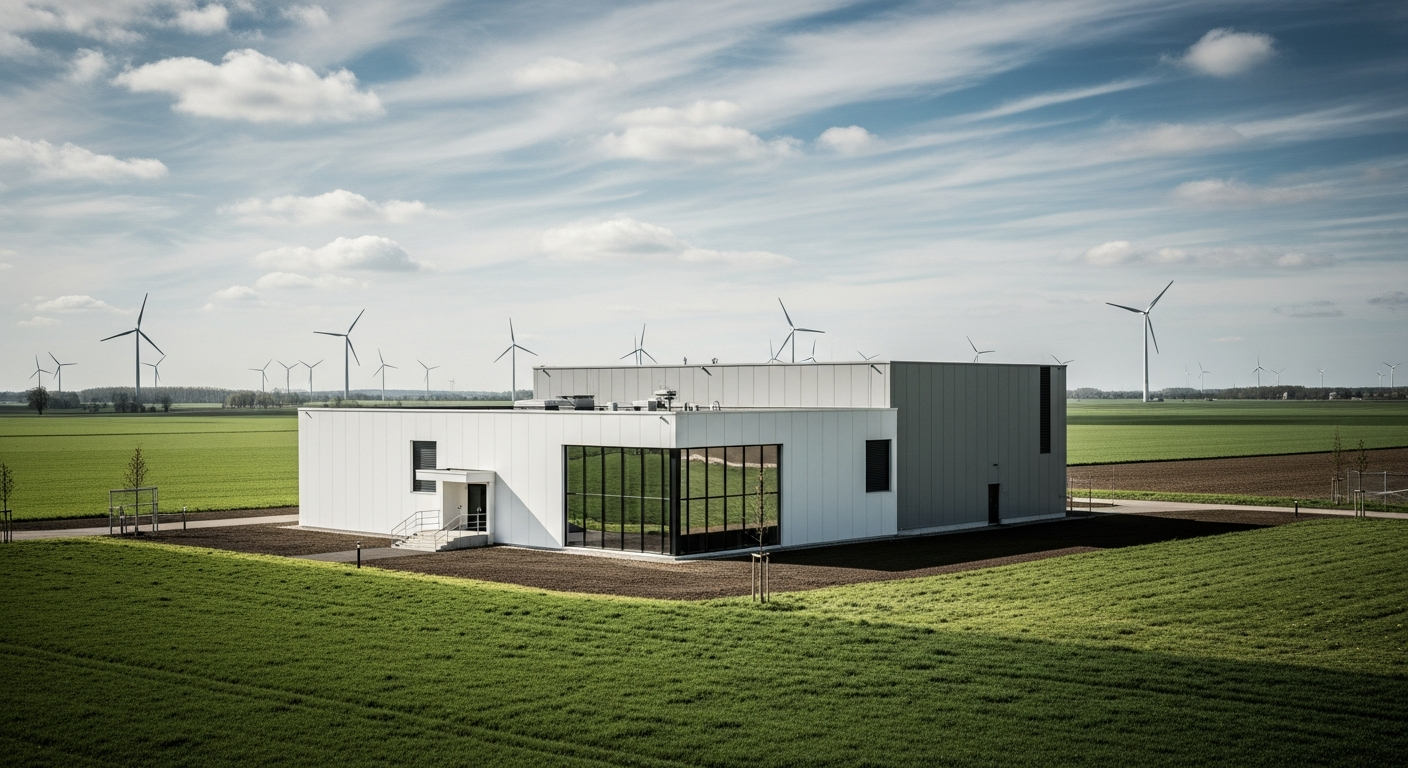
Most conversations about thorium molten salt reactors focus on the reactor. The fuel cycle. The waste profile. The safety case. These are important. But they are first-order effects - the direct, mechanical consequences of building the technology.
The more interesting question - and the one that should shape investment decisions, policy frameworks, and strategic planning - is: what happens next? What are the second and third order effects when a continent of 450 million people suddenly has access to clean, baseload energy at EUR 0.01/kWh?
The answer reshapes nearly every domain of European life. Energy is not a sector. It is the substrate on which every sector operates. Change the substrate, and everything built on top of it changes too.
First order: the direct effects
These are well understood by now. Thorium MSRs deployed across Europe would:
- Provide 24/7 baseload electricity and high-temperature industrial heat at a levelized cost of EUR 0.01-0.02/kWh
- Eliminate carbon emissions from power generation and industrial heating - approximately 1.5 gigatons of CO2 per year across the EU
- Reduce nuclear waste volumes by 97% compared to conventional uranium reactors, with remaining waste decaying to background radiation in ~300 years
- Operate on thorium fuel that is 3-4x more abundant than uranium, domestically available across Europe, and strategically inconsequential to import
The technology for this exists. China's SINAP/CAS has built and operated a thorium MSR, investing over $3.3 billion in R&D since 2011. The physics is proven. What remains is licensing, regulatory adaptation, and deployment - engineering and political challenges, not scientific ones.
Why renewables alone cannot get us here
This is not an anti-renewables argument. Solar and wind are extraordinary technologies and should be deployed as aggressively as possible. But they face fundamental physical constraints that prevent them from delivering EUR 0.01/kWh baseload energy to an industrial continent.
| Challenge | Solar / Wind | Thorium MSR |
|---|---|---|
| Capacity factor | 15-30% | 90%+ |
| Baseload capable | No (intermittent) | Yes (24/7) |
| Land use (km per GW) | 50-150 | < 0.5 |
| Material intensity | High (rare earths, copper, lithium) | Low (common materials) |
| Grid-scale storage required | Massive | None |
| Industrial heat (500C+) | Cannot deliver directly | Core capability |
| Fuel lifespan | N/A (weather dependent) | 40 years pre-loaded |
The numbers are unambiguous. Global power demand must expand by roughly 219% to meet decarbonization targets, AI and data center growth (945 TWh by 2030 alone), industrial electrification, and EV fleet expansion. Renewables will supply a large share of that growth - but they cannot supply all of it. Not because they are bad technology, but because the sun does not always shine and the wind does not always blow, and 50-150 square kilometers of land per gigawatt is a constraint that compounds as you scale.
A steel mill needs 1,200C around the clock. A chemical plant cannot pause when cloud cover rolls in. A data center running AI inference needs power every second of every day. These are not edge cases - they represent roughly half of European industrial energy demand.
The honest answer is not renewables or nuclear. It is renewables and nuclear, each doing what it does best. Solar and wind for distributed, daytime, variable generation. Thorium MSRs for dense, continuous, baseload power and industrial heat. Together, they deliver what neither can alone: a fully decarbonized energy system that actually works for an industrial economy.
But let us move past the energy source itself. Let us talk about what cheap energy does to a continent.
Second order: the industrial renaissance
The factories come back
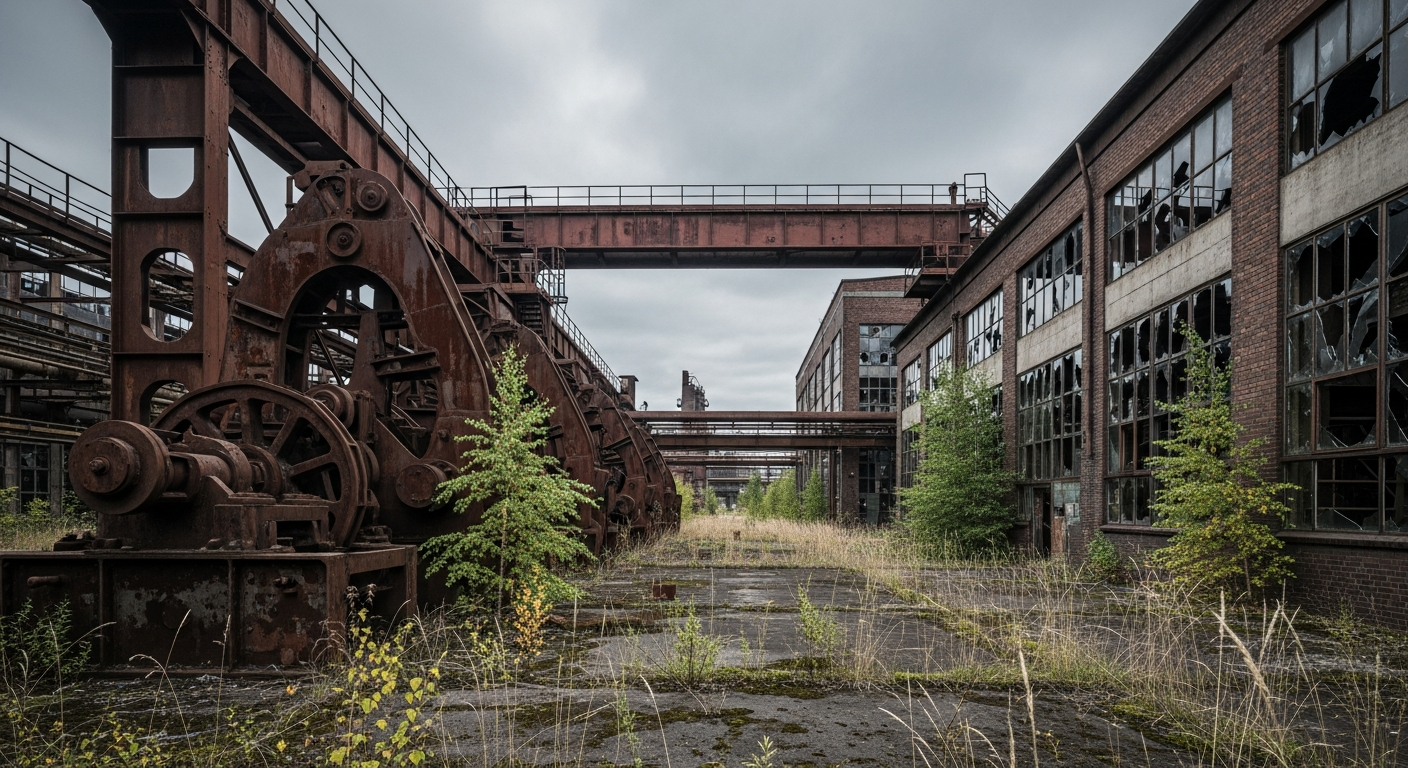
The numbers on European deindustrialization are not ambiguous. They are alarming.
Between 2018 and 2024, the EU lost 700,000 manufacturing jobs. Europe's share of global aluminium production collapsed from 30% in 2000 to just 5% in 2022. Steel production hit its lowest level since 1960 - not because demand disappeared, but because producing steel in Europe costs more than importing it from Asia, shipping included.
BASF - the world's largest integrated chemical company, the crown jewel of German industry, a company that has operated in Ludwigshafen since 1865 - announced in 2022 that it would permanently downsize its German operations and invest EUR 10 billion in a new complex in Zhanjiang, China. The CEO was explicit about the reason: energy costs.
This is not an anecdote. It is a pattern. European industrial electricity prices in 2023 were 158% higher than in the United States. For natural gas, the gap is similar. Energy-intensive industries - chemicals, steel, cement, glass, paper, aluminium - operate on margins of 5-15%. When your energy costs double, your margins don't shrink. They disappear.
The European Round Table for Industry (ERT) warned in 2024 that Europe faces "structural deindustrialization" unless energy costs are addressed. Arthur D. Little's analysis reached the same conclusion. Bruegel, the Brussels-based economic think tank, published a detailed study showing that the energy price shock is not cyclical but structural - European industry will not recover without a fundamental change in energy supply.
Now imagine a different scenario.
A single containerized thorium MSR - 40 MWe, fitting inside a 40-foot shipping container, costing roughly EUR 50 million - powers 100,000 homes. Or one large city district. Or 3-5 data centers. Or one steel plant. Compare that to conventional nuclear: EUR 5 billion and 15 years for a single gigawatt-scale reactor. The economics are different by two orders of magnitude.
Ten reactors power a million homes - Brussels and Antwerp combined. Fifty reactors power all of Denmark. A hundred and sixty reactors power 16 million households - the equivalent of the Netherlands and Belgium together. This is not a thought experiment at planetary scale. It is a deployment program comparable in size to a single year of European wind turbine installation.
The concrete savings are staggering:
| Customer | Current Cost | With MSR | Annual Saving |
|---|---|---|---|
| Industrial plant (40 MW) | EUR 0.19-0.22/kWh | EUR 0.04/kWh | EUR 3M+ |
| City of 100,000 (district heating) | Gas boilers + grid | Single MSR | EUR 40-70M city-wide |
| Average household (indirect) | EUR 1,000/yr energy bill | Via lower wholesale | EUR 300-500/yr |
| Green steel production | EUR 500-550/ton | EUR 80-130/ton | 75-80% cost reduction |
| Green hydrogen | EUR 3-5/kg | EUR 0.10/kg | 95%+ cost reduction |
A European chemical plant currently paying EUR 0.10/kWh for process heat from natural gas switches to a thorium MSR delivering the same heat at EUR 0.02/kWh. For a plant consuming 500,000 MWh of heat per year, that is a cost reduction of EUR 40 million annually. Not over the plant's lifetime. Per year.
To put the competitiveness gap in perspective: European industrial electricity costs average EUR 0.19/kWh. The United States pays EUR 0.075/kWh. China pays EUR 0.082/kWh. European industry pays 2.5 times more than its American competitors for the same electrons. Thorium MSRs at EUR 0.01-0.04/kWh do not just close this gap. They eliminate it - and then some. European industry goes from the most expensive energy market in the developed world to among the cheapest.
At these economics, the equation that drove BASF to China reverses. The calculation that makes American grey steel cheaper than European green steel - even including transatlantic shipping - flips. The structural disadvantage that has been hollowing out European manufacturing for two decades becomes a structural advantage.
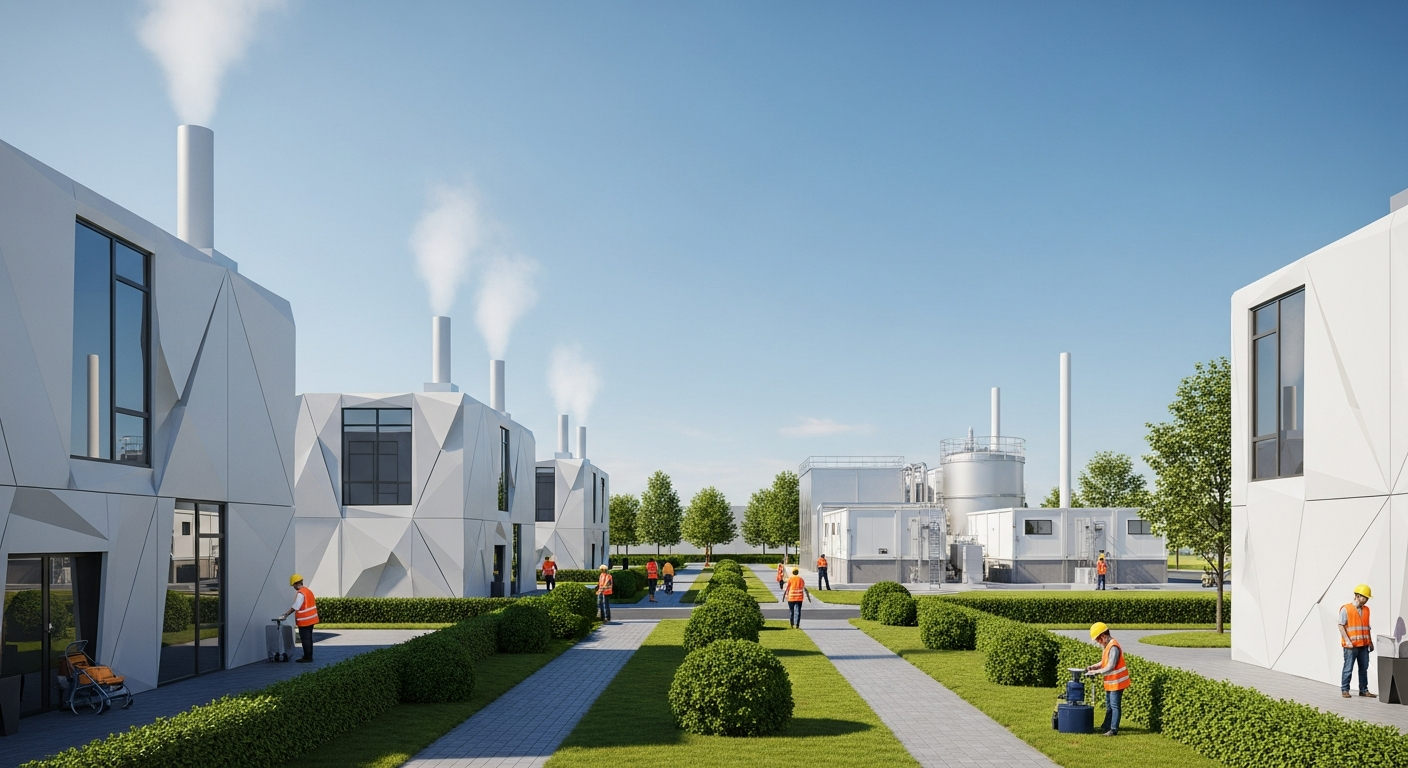
The second-order effect is not incremental improvement. It is re-industrialization. Not with the dirty, carbon-intensive factories of the 20th century, but with zero-emission industry powered by nuclear heat. European manufacturing becomes simultaneously the cleanest and the cheapest in the developed world.
The downstream effects compound in ways that policymakers rarely model because they cross departmental boundaries:
Manufacturing jobs return - and they are better jobs. The 700,000 manufacturing positions lost since 2018 were not just numbers. They were the economic foundation of entire regions - the Ruhr Valley, the industrial Midlands, Wallonia, the Po Valley. When a steel plant closes, the sandwich shop next door closes. The school loses enrollment. The tax base erodes. The doctor leaves. The decline is not linear - it is a cascade. Re-industrialization reverses the cascade. A single green steel plant employing 2,000 people generates an estimated 4,000-6,000 indirect jobs in the surrounding economy. Multiply this across chemicals, cement, glass, aluminium, and advanced manufacturing, and you are looking at millions of jobs returning to regions that have spent two decades losing them.
Supply chains re-localize. European industry currently depends on global supply chains that proved catastrophically fragile during COVID-19 and the post-2022 energy crisis. When European manufacturing is cost-competitive, the economic logic of shipping raw materials to Asia, processing them there, and shipping finished goods back collapses. It becomes cheaper to build the entire supply chain within Europe - from raw material processing to final assembly. This is not protectionism. It is economics.
The populism pressure valve releases. The rise of far-right populism across Europe - from AfD in Germany to Rassemblement National in France to Fratelli d'Italia - has one consistent material foundation: the economic decline of industrial regions. Communities that lost their factories feel abandoned. They are not wrong. Re-industrialization does not solve populism directly, but it removes the economic grievance that populism feeds on. People with good jobs in functioning communities are less susceptible to narratives of decline and betrayal.
Industries that don't exist yet
Some of the most transformative effects come not from saving existing industries but from enabling entirely new ones. There are industries that cannot exist at EUR 0.15/kWh but become inevitable at EUR 0.01/kWh:
Synthetic aviation fuel. The Fischer-Tropsch process can synthesize kerosene from hydrogen and captured CO2. The chemistry is well understood - it was invented in the 1920s. The problem is energy cost. Producing one liter of synthetic jet fuel requires roughly 25-30 kWh of energy input. At European electricity prices of EUR 0.10-0.15/kWh, synthetic fuel costs EUR 3-5 per liter - roughly 5x the price of conventional jet fuel. At EUR 0.01/kWh, the energy cost drops to EUR 0.25-0.30 per liter. Add capital and operating costs, and synthetic kerosene reaches EUR 0.80-1.20 per liter - competitive with fossil jet fuel, especially under carbon pricing.
The implication: Europe could become a net exporter of carbon-neutral aviation fuel. Every airport on the continent could run on synthetic kerosene produced from captured CO2 and nuclear-powered electrolysis. Aviation - one of the hardest sectors to decarbonize - is solved not by battery-powered planes or hydrogen turbines, but by making the existing fuel carbon-neutral through cheap energy.
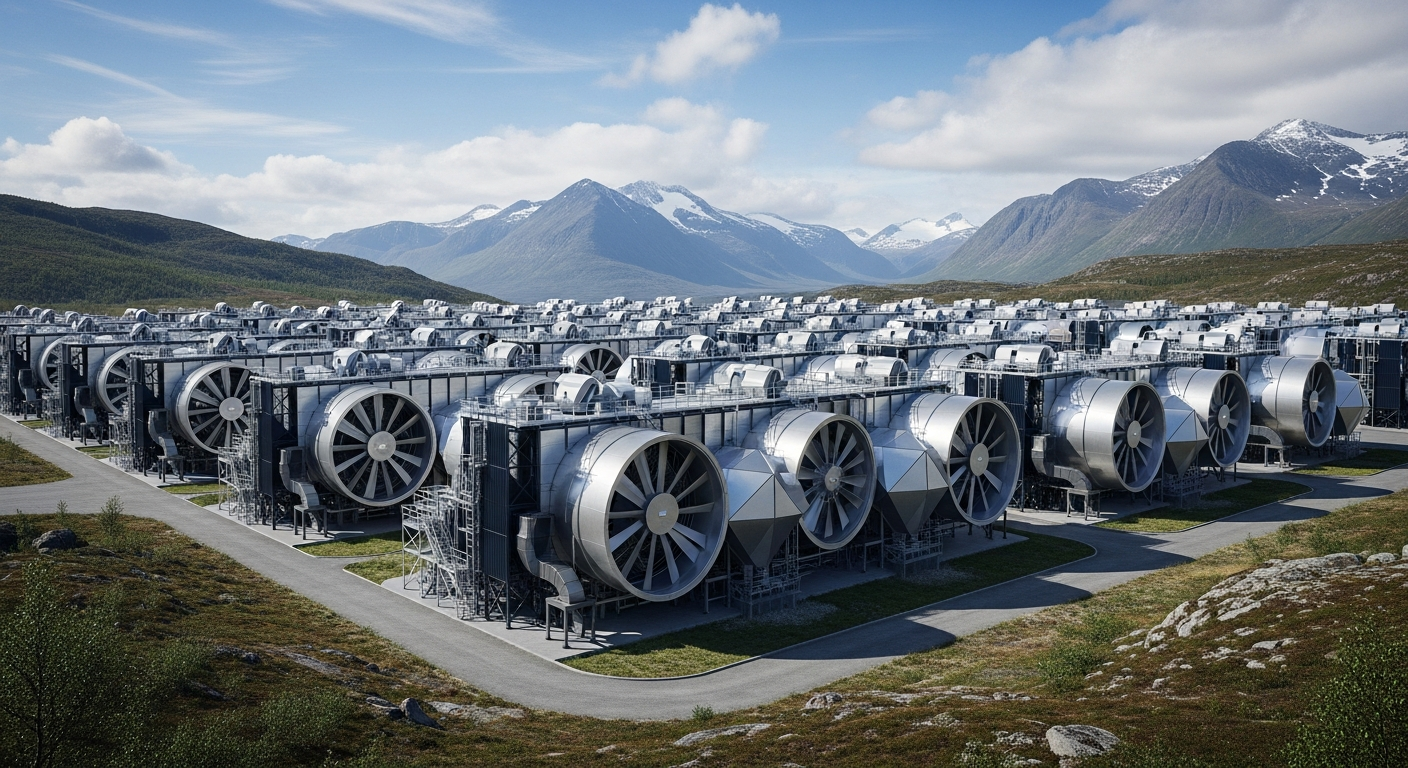
Direct air capture at gigatons-per-year scale. Removing CO2 directly from the atmosphere currently costs $600-1,000 per ton. Energy represents 60-80% of that cost. Each ton of CO2 captured requires 1.4-4.2 MWh of energy. At EUR 0.10/kWh, the energy cost alone is EUR 140-420 per ton. At EUR 0.01/kWh, it drops to EUR 14-42 per ton.
Combined with capital cost reductions from manufacturing at scale, DAC below $100/ton becomes not just achievable but routine. At that price, carbon removal shifts from expensive climate gesture to viable industrial sector. A single 100MW reactor dedicated to DAC could remove roughly 300,000-500,000 tons of CO2 per year. A hundred such installations across Europe - a modest number given the continent's size - removes 30-50 million tons annually.
But the third-order effect is more profound: Europe goes carbon negative. Not net zero. Negative. The continent begins actively removing its historical emissions from the atmosphere. This changes the global climate conversation from sacrifice ("how much must we give up?") to opportunity ("how fast can we clean up?").
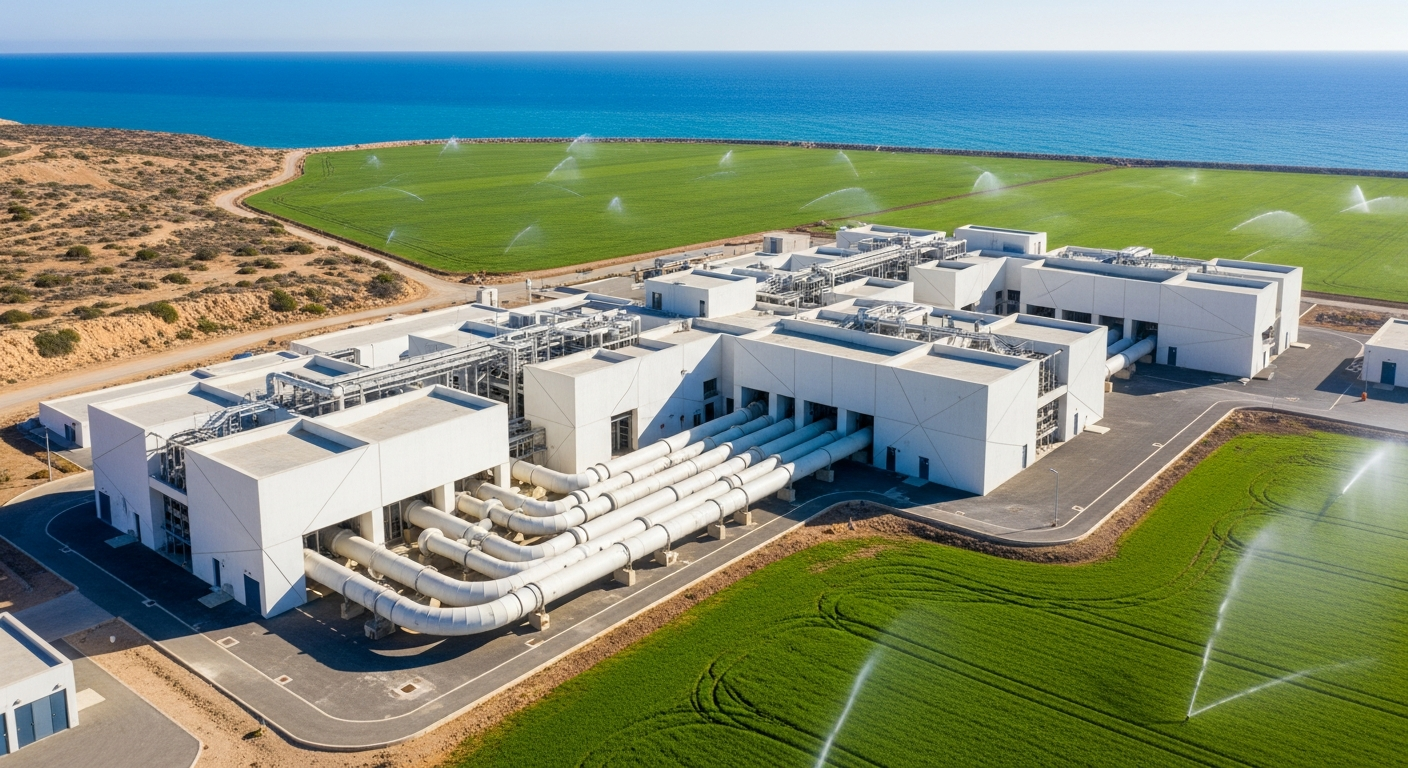
Unlimited freshwater for the Mediterranean basin. Southern Europe faces accelerating water scarcity. Spain, Italy, Greece, and southern France experience regular drought. Agricultural output is constrained by water availability. Cities implement rationing. Ecosystems are degrading.
Modern reverse osmosis desalination requires 2.5-3.5 kWh per cubic meter of freshwater. At EUR 0.01/kWh, that is EUR 0.025-0.035 per cubic meter of drinking water from seawater. Essentially free.
A single 100MW reactor could power desalination plants producing roughly 600,000-800,000 cubic meters of freshwater per day - enough for a city of 2-3 million people. Deploy ten such systems along the Mediterranean coast and you have solved Southern Europe's water crisis. Permanently. Agriculture no longer depends on rainfall. Cities no longer ration. Aquifer depletion reverses because the pressure on groundwater disappears.
The third-order effect: land that was abandoned due to desertification becomes farmable again. Southern Spain, Sicily, Sardinia, the Greek islands - regions losing population and economic vitality because of water scarcity - become productive. The demographic decline of Southern Europe's rural areas begins to reverse, not through subsidy but through infrastructure.
Vertical farming at staple-crop economics. Indoor agriculture uses roughly 200-400 kWh per square meter per year for lighting and climate control. At EUR 0.10/kWh, energy costs make vertical farming viable only for high-value crops like leafy greens and herbs. At EUR 0.01/kWh, energy costs drop 10x - and the economics expand to wheat, rice, and vegetables. European food security becomes independent of weather, season, and imported inputs. Agricultural land can be returned to nature at scale.
Green hydrogen at fossil-parity. Electrolysis requires 50-55 kWh per kilogram of hydrogen. At EUR 0.10/kWh, green hydrogen costs EUR 5-6/kg - far more expensive than natural gas for most applications. At EUR 0.01/kWh, electrolyzer energy costs drop to EUR 0.50-0.55/kg. Total production cost with capital reaches EUR 1.50-2.00/kg - competitive with grey hydrogen from natural gas without any carbon pricing. European hydrogen infrastructure, currently struggling with economics, becomes globally competitive overnight. High-temperature electrolysis using nuclear heat is 20-60% more efficient still, reducing costs further.
Second order: the geopolitical reset
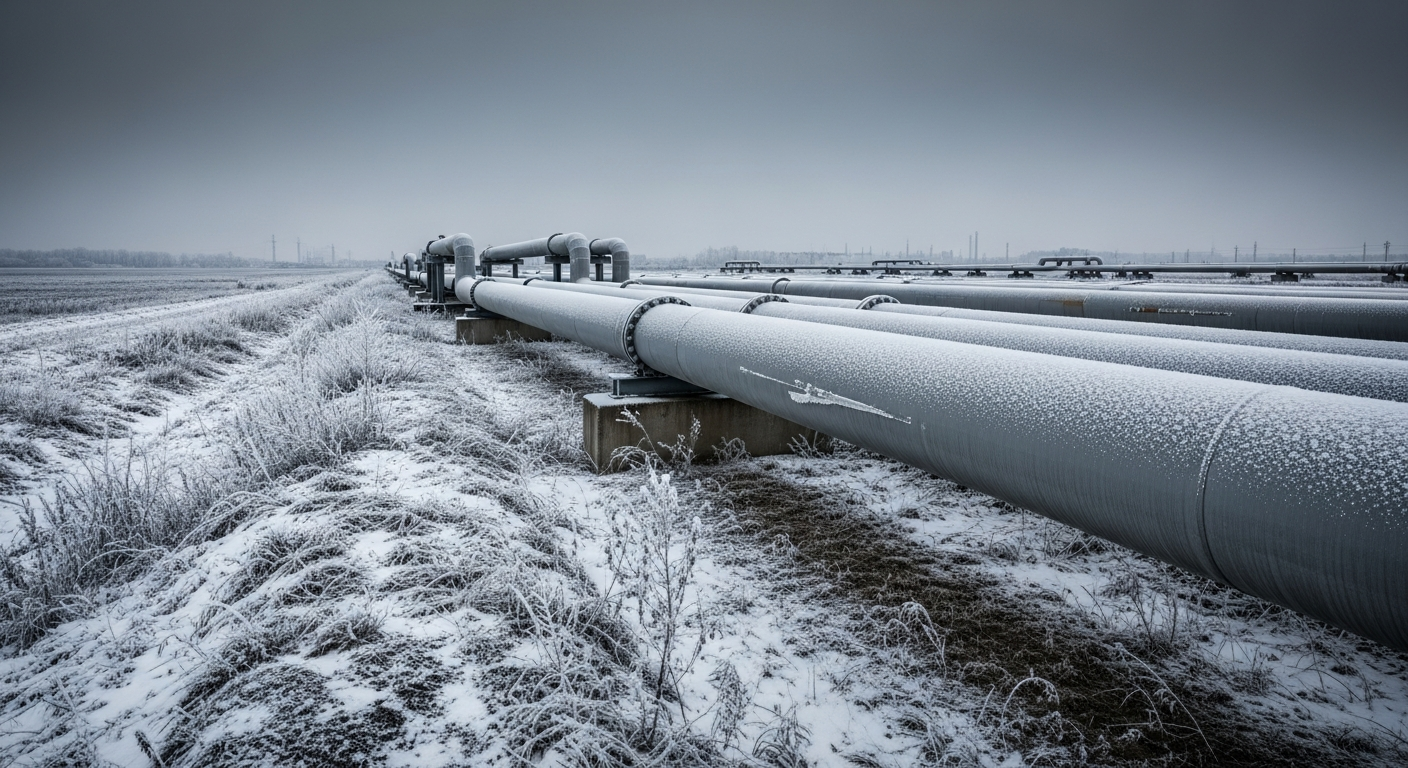
Russia loses its leverage. Permanently.
In 2025, the EU still spent EUR 7.2 billion on Russian LNG alone - from the Kremlin's flagship Yamal project - despite years of pledges to end dependency. Total European spending on LNG imports from the start of 2022 to mid-2025 exceeded EUR 258 billion, with EUR 117.4 billion going to the United States and EUR 37.5 billion to Russia.
The EU finally adopted a stepwise ban on Russian gas imports in January 2026. But banning Russian gas and replacing it with American, Qatari, and Norwegian LNG does not eliminate dependency. It diversifies it. Europe still imports roughly 140 billion cubic meters of LNG per year. The tanker routes, the commodity price exposure, the geopolitical vulnerability - they persist. Only the sender's flag changes.
A Europe powered by thorium does not import energy at all. Thorium is available from domestic European sources, or from geopolitically stable allies - Australia (the world's largest thorium deposits), India, Brazil, Canada. A 100MW reactor runs for 5-7 years between refueling on a few tons of fuel. There are no pipelines to sabotage. No tanker routes to blockade. No spot prices to manipulate. No commodity traders to enrich. No petrostates to appease.
The second-order geopolitical effect: European foreign policy is liberated from energy dependency. For 50 years, every European strategic calculation - toward Russia, the Middle East, North Africa, the Gulf - has been filtered through the question: "What does this mean for our energy supply?" That question ceases to exist.
Germany no longer needs to maintain "special relationships" with gas suppliers. France no longer needs to balance North African stability concerns against energy security. Italy no longer depends on Libyan and Algerian gas. The entire diplomatic architecture that Europe has built around energy dependency - the deference, the compromises, the willingness to overlook human rights abuses in supplier states - becomes unnecessary.
This is not sanctions. Sanctions are temporary political tools that can be evaded, circumvented, and reversed. Demand destruction is structural. When Europe stops needing gas, no policy change brings the demand back.
The petrostates weaken
When Europe - a market of 450 million wealthy consumers - stops buying fossil fuels, the economic model of every petrostate weakens simultaneously. The numbers are specific and consequential:
Russia derives roughly 30-40% of its federal budget revenue from oil and gas. In 2024, hydrocarbon revenues totaled approximately $112 billion. Europe was historically Russia's largest energy customer - before the 2022 invasion, the EU purchased roughly 40% of Russia's gas exports and 25% of its oil. Even after sanctions and diversification, Russian LNG continues to flow to Europe. A thorium-powered Europe eliminates this revenue stream permanently. Not through sanctions that can be evaded via shadow fleets and intermediary countries, but through structural demand destruction. You cannot sanction-proof against a customer who genuinely does not need your product anymore. The fiscal pressure on Moscow intensifies at precisely the time when military spending is consuming an ever-larger share of the budget.
The Gulf states - Saudi Arabia, UAE, Qatar, Kuwait - have pursued ambitious diversification programs (Saudi Vision 2030, UAE's post-oil strategy). But hydrocarbons still account for 60-70% of Saudi government revenue and a similar share of export income. The Gulf's diversification is real but incomplete, and it is funded by current hydrocarbon revenues. When the world's wealthiest consumer market stops buying fossil fuels, global prices weaken, and the revenue that funds the diversification itself diminishes. This creates a timing problem: the Gulf needs 15-20 more years of strong hydrocarbon revenue to complete its transition. European demand destruction compresses that timeline.
North African suppliers - Algeria, Libya, Egypt - are far more vulnerable. Algeria's gas exports to Europe (primarily via the Medgaz and Transmed pipelines) account for roughly 95% of its hydrocarbon export revenue. Libya's entire post-conflict economic recovery depends on oil exports. Egypt's recent Eastern Mediterranean gas developments were predicated on European demand. For these countries, European demand destruction is not a fiscal inconvenience - it is an existential economic threat. The stability implications are significant: North African governments that lose their primary revenue source face internal pressures that inevitably affect European security interests through migration, terrorism, and regional instability.
Norway is the most interesting case. It faces reduced oil and gas revenue - but this is precisely what the $1.7 trillion sovereign wealth fund was built for. Norway has, perhaps uniquely among petrostates, prepared for this transition. The irony is elegant: Norwegian oil wealth, saved rather than spent, could become the capital that funds the thorium transition that makes Norwegian oil irrelevant. The fund's multi-generational time horizon is perfectly suited to infrastructure investments that pay off over decades rather than quarters.
The third-order effect: the global power structure shifts away from resource extraction toward technology and infrastructure. For a century, geopolitical power has correlated with control over fossil fuel deposits - the oil shocks of 1973, the petrodollar system, the Gulf Wars, the weaponization of Russian gas. A thorium-powered Europe breaks this correlation. Countries that control energy technology - reactor design, fuel processing, advanced manufacturing - gain influence. Countries whose power derived from geological accident lose it. This is the most significant geopolitical realignment since the oil shocks of the 1970s, but in reverse. And unlike fossil fuel deposits, technology can be learned, shared, and improved. The new energy order is not zero-sum.
China becomes a technology partner
Here is the geopolitical outcome that most analysts miss: licensing thorium MSR technology from China creates a new form of Sino-European interdependence - but a structurally different one from gas dependency.
Gas dependency gives the seller leverage because the buyer literally cannot function without continuous supply. Cut the gas and factories close, homes freeze, economies crash. The dependency is permanent and the leverage is absolute.
Technology licensing is different. China earns licensing revenue and gains a European deployment partner who validates the technology in the world's most demanding regulatory environment. Europe gains proven reactor designs and accelerates deployment by a decade. But once the technology is licensed, adapted for EURATOM, and manufactured domestically, the dependency ends. Europe builds its own reactors in its own factories with its own engineers.
The dependency is temporary. The capability is permanent. This is strategic partnership, not strategic vulnerability.
Second order: the social transformation
Energy poverty ends
The numbers are stark. 48 million Europeans cannot adequately heat their homes. In Bulgaria, Greece, Portugal, and Lithuania, 30% of the population is classified as energy poor. Even in wealthy Northern European countries, rising energy costs push vulnerable households into impossible choices between heating, eating, and medical care.
Between 35 and 72 million EU citizens face challenges meeting the cost of their energy bills, depending on measurement methodology. The European Environment Agency reports that the problem worsened significantly after 2021, with the share of Europeans unable to heat their homes rising from 6.9% to over 10% before declining slightly to 9.2% in 2024.
District heating powered by thorium MSRs delivers heat at a fraction of current costs. Consider Helsinki, where district heating serves 90% of buildings, consuming roughly 7 TWh annually. Two 500MW thermal MSRs could supply the entire city's heating needs at EUR 0.01-0.02/kWh - a 70-80% cost reduction compared to current gas and biomass prices.
Scale this across European cities with district heating networks - Stockholm, Munich, Copenhagen, Vienna, Warsaw, Berlin, Amsterdam - and millions of households see their heating costs collapse. Not through subsidy or transfer payment, but through the structural cost of energy production.
The second-order social effect: energy poverty is solved not by policy but by physics. No means-testing. No bureaucracy. No political negotiation about who deserves help. The price simply drops to a level where heating a home costs almost nothing.
The third-order social effect: the political pressure that energy poverty generates - the resentment, the populist appeal, the sense that the system does not work for ordinary people - diminishes. Not because politicians made better speeches, but because the material condition that caused the resentment improved.
The cost of everything drops
Energy is an input to everything. Manufacturing, agriculture, transportation, construction, water treatment, healthcare facilities, data centers, retail, logistics - every sector of the economy uses energy, directly or through its supply chain.
When energy costs drop by an order of magnitude, cost reductions cascade through every supply chain in the economy. This is not theoretical - you can trace the energy input through specific goods:
Food. The Haber-Bosch process that produces nitrogen fertilizer - the foundation of modern agriculture - consumes roughly 1-2% of global energy. Fertilizer prices spiked 300% during the 2022 energy crisis, directly raising food costs across Europe. But it goes deeper: irrigation pumps, grain drying, cold chain logistics, food processing, packaging (glass, aluminium, plastic - all energy-intensive), transport to retail. A loaf of bread touches energy costs at every stage from field to shelf. Conservative estimates suggest energy represents 15-25% of final food costs in Europe. A 10x energy cost reduction does not make food 10x cheaper - but it makes it meaningfully cheaper, and it makes those price reductions permanent rather than cyclical.
Housing. Cement production requires 850-1,000C kiln temperatures. Steel rebar requires electric arc furnaces. Glass requires 1,500C. Aluminium smelting requires 960C and enormous electricity. Brick kilns, insulation manufacturing, copper wire drawing - all energy-intensive. Construction material costs have risen 30-40% since 2020, with energy a primary driver. At EUR 0.01/kWh, the input costs for every building material drop substantially. Housing construction becomes cheaper. This matters because Europe faces a housing crisis - not just in London and Paris but in Berlin, Amsterdam, Dublin, and Lisbon. Cheaper building materials do not solve housing policy. But they remove one of the binding constraints.
Healthcare. Hospitals are among the most energy-intensive buildings in any economy. A typical European hospital consumes 300-400 kWh per square meter per year - roughly 3x a commercial office building. They run 24/7, require precise climate control, power MRI machines and CT scanners that draw enormous current, operate autoclaves and sterilization equipment, and maintain cold storage for pharmaceuticals. The NHS in the UK spends over GBP 1 billion annually on energy. Multiply across 27 EU member states and hospital energy costs alone run into the tens of billions. Cheap energy does not fix healthcare. But it frees billions in operating budgets that could go to staff, equipment, and patient care instead of electricity bills.
Transport. Synthetic fuels at EUR 0.80-1.20/liter replace jet fuel at EUR 1.50-2.00/liter. Electric vehicles charged at EUR 0.01/kWh cost roughly EUR 0.003 per kilometer in energy - compared to EUR 0.08-0.12 for petrol. Freight rail, already the most energy-efficient transport mode, becomes radically cheaper. The cost of moving anything from anywhere to anywhere drops. This compounds through every product that needs to be shipped - which is every product.
This is deflationary in the most positive sense: not deflation from weak demand (which signals economic distress) but deflation from genuine productivity improvement (which signals abundance). The same goods and services cost less to produce, which means they cost less to buy.
The distributional effect is progressive, and this deserves emphasis. The bottom quintile of European households spends roughly 10-15% of income on energy directly, and a further 30-40% on energy-intensive goods (food, housing, transport). The top quintile spends 3-5% on energy directly. When the substrate cost drops, lower-income households see proportionally larger gains. A family spending EUR 3,000/year on energy and EUR 8,000 on food and transport saves meaningfully more, as a share of their income, than a wealthy household spending EUR 5,000 on energy and EUR 20,000 on the same categories. Cheap energy is, in effect, a universal raise that disproportionately helps those who need it most. It is the most progressive economic policy possible - and it requires no redistribution mechanism, no political negotiation, and no bureaucratic administration. The price simply drops.
Third order: the knowledge cascade
A new generation of nuclear engineers
Europe's nuclear engineering expertise has been atrophying for decades. France's Ecole des Mines, once the gold standard for nuclear engineering education, has seen enrollment in nuclear-specific programs decline by over 60% since the 1990s. Germany shut down its last reactor in 2023 and effectively dismantled its nuclear regulatory capability. The UK's nuclear workforce is aging out - the average age in the sector exceeds 50, and recruitment cannot keep pace with retirement. Across the EU, fewer than 3,000 nuclear engineering graduates enter the workforce annually. By comparison, China graduates roughly 10,000 per year and is accelerating.
This is not just a workforce problem. It is an institutional knowledge crisis. The engineers who designed, built, and operated Europe's existing reactor fleet carry knowledge that was never fully codified - practical wisdom about materials behavior under neutron flux, weld integrity in high-radiation environments, the thousand small decisions that separate a reactor that works from one that does not. When these engineers retire without successors, that knowledge is gone. You cannot Google it. You cannot ChatGPT it. It exists only in the heads of people who are leaving the workforce.
Deploying thorium MSRs across Europe requires rebuilding this expertise - but with a crucial difference. The old nuclear workforce was built around a single generation of reactor designs (pressurized water reactors) that required enormous teams for enormous facilities. A modular MSR program requires a different workforce profile:
- Materials scientists specializing in Hastelloy-N and other high-temperature, corrosion-resistant alloys suitable for molten fluoride salt environments
- Molten salt chemists managing FLiBe (lithium fluoride-beryllium fluoride) salt chemistry, thorium fuel processing, and fission product management
- Modular manufacturing engineers who understand factory production of nuclear-grade components at volume - closer to aerospace manufacturing than traditional nuclear construction
- Regulatory pioneers navigating novel safety cases through EURATOM and national regulators, writing the frameworks that do not yet exist for atmospheric-pressure liquid-fuel reactors
- Grid integration specialists managing the interaction between baseload nuclear, variable renewables, and industrial heat customers
- Nuclear security specialists for a fuel cycle that, unlike uranium, does not produce weapons-usable material - a fundamentally different security posture requiring new frameworks
A deployment of 160 reactors over a decade requires an estimated 30,000-50,000 direct workers in manufacturing, construction, operation, and maintenance. The indirect workforce - supply chain, support services, regulatory, research - multiplies this by 3-5x. You are looking at 100,000-250,000 high-skilled jobs created in a single decade. For context, the entire European wind energy sector employs approximately 300,000 people after 30 years of development.
But the third-order effect is broader and more important: expertise does not stay in its original domain. This is one of the most robust findings in the economics of innovation - knowledge spillover is real, measurable, and systematically underestimated by policymakers.
Engineers trained in high-temperature materials science for reactor vessels find that the same Hastelloy alloys and corrosion chemistry are directly applicable to next-generation chemical processing, aerospace turbines, and geothermal energy systems. Molten salt chemists developing fuel processing techniques advance thermal energy storage (molten salt batteries), concentrated solar thermal systems, and industrial chemistry. The precision manufacturing techniques required for nuclear-grade modular components transfer directly to aerospace, medical devices, and advanced automotive manufacturing. Quality assurance and safety engineering frameworks developed for nuclear - the most demanding safety culture in any industry - become templates for AI safety governance, biotechnology regulation, and autonomous systems certification.
The historical precedent is instructive. The US nuclear weapons and naval reactor programs of the 1950s-1970s created an engineering workforce that went on to build the semiconductor industry, the space program, and the foundations of modern materials science. The nuclear program did not just produce reactors - it produced the institutional capability to do hard technical things at scale. A European thorium program would do the same, but for the 21st century technology stack.
A nuclear renaissance seeds a broader engineering renaissance. The skills, the institutional knowledge, the manufacturing capability, the regulatory sophistication - all of this spills over into adjacent sectors and raises the technological capability of the entire European economy. This is not a jobs program. It is a capability program. And capabilities, unlike subsidies, compound.
The rare earth supply chain materializes
This is perhaps the most underappreciated third-order effect.
Thorium is not mined directly. It is a byproduct of rare earth mining, specifically from monazite sands that contain 3-22% thorium alongside rare earth elements. Currently, thorium is classified as radioactive waste during rare earth processing - an expensive disposal problem that actually discourages monazite processing outside China.
A thorium fuel cycle reverses this equation entirely. Thorium becomes a valuable product - reactor fuel - and rare earths become the byproduct. This creates a powerful economic incentive to process monazite in Europe.
Today, China controls roughly 60% of rare earth mining and an even higher share of processing. European wind turbines need neodymium. European EVs need dysprosium. European electronics need a dozen different rare earth elements. All of it flows through Chinese supply chains, creating a strategic vulnerability that European policymakers acknowledge but have been unable to solve.
A European thorium fuel cycle solves it as a side effect. Building thorium processing capacity means building rare earth processing capacity. The same facilities that extract thorium for reactor fuel produce the neodymium, dysprosium, praseodymium, and other elements that European industry desperately needs.
Two strategic vulnerabilities - energy dependency and rare earth dependency - resolved by a single supply chain. This is the kind of compound strategic advantage that does not emerge from sector-specific policy but from infrastructure-level thinking.
The scientific frontier expands
Cheap, abundant energy enables scientific research that is currently too expensive to attempt at the required scale:
-
Particle accelerators consume enormous amounts of electricity. CERN's Large Hadron Collider uses roughly 1.3 TWh per year. Next-generation colliders under discussion (FCC at CERN, CEPC in China) would use several times more. At EUR 0.01/kWh, operational energy costs become negligible, removing a major constraint on experimental physics.
-
Fusion research requires sustained high-energy plasma containment. ITER and its successors need reliable baseload power for extended experimental campaigns. Cheap nuclear fission energy provides the perfect bootstrap for nuclear fusion development.
-
Supercomputing and AI infrastructure is energy-limited - and this is arguably the most strategically urgent item on the list. Global data center power demand is projected to reach 945 TWh by 2030, with hyperscaler power needs doubling every 2-3 years. Training a single frontier AI model already requires hundreds of megawatts sustained over months. At European electricity prices of EUR 0.19-0.22/kWh, no rational hyperscaler builds in Europe when American power costs half as much. The result: Microsoft, Google, Meta, and Amazon build their AI infrastructure in the US and Nordics, and European AI companies either relocate or accept permanent disadvantage. At EUR 0.01/kWh, that calculation reverses overnight. A single 40 MWe thorium MSR can power 3-5 data centers continuously, without grid dependency, without intermittency, without carbon emissions. Europe becomes not just competitive for AI compute but structurally advantaged - offering the cheapest, cleanest, most reliable power on the planet for the most energy-hungry industry in history.
-
Materials science relies on energy-intensive testing facilities - neutron sources, synchrotrons, extreme-condition laboratories. Cheap energy enables larger, more capable facilities that accelerate discovery across every materials-dependent field.
The third-order effect: Europe becomes the global hub for large-scale scientific infrastructure, attracting researchers who currently leave for the US or Asia. The brain drain reverses - not through visa programs or salary subsidies, but through unmatched research infrastructure powered by abundant cheap energy.
Third order: the climate reversal
If Europe deploys thorium MSRs at scale and:
- Eliminates fossil fuel combustion for electricity and industrial heat (~1.5 Gt CO2/year)
- Powers direct air capture at 50-100 million tons per year
- Produces synthetic fuels for remaining aviation and shipping
- Provides cheap hydrogen for steel, chemicals, and heavy transport
...the continent does not just reach net zero. It goes carbon negative.
Europe begins actively removing CO2 from the atmosphere - not just its current emissions, but its cumulative historical emissions since the Industrial Revolution. At scale, this is atmospheric restoration: returning CO2 concentrations toward pre-industrial levels.
The third-order climate effect is psychological and political as much as physical. Europe demonstrates, at continental scale, that industrial civilization and atmospheric restoration are compatible. That you do not have to choose between prosperity and a stable climate. That the energy transition is not about sacrifice but about upgrading to better technology.
This proof of concept changes the global climate conversation. Developing nations no longer face the false choice between industrialization and emissions reduction. The technology that powers European prosperity can power theirs too - at even lower cost, because they can skip the fossil fuel era entirely.
The compounding system
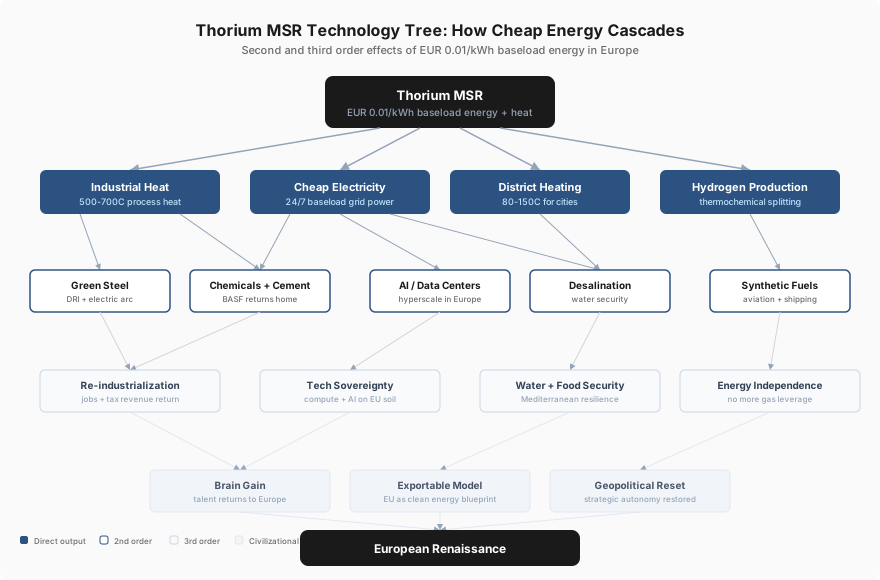
What distinguishes this analysis from typical energy policy is that these effects are not independent. They form a compounding system where each effect reinforces the others:
- Cheap energy → re-industrialization → more tax revenue → more funding for science and infrastructure → faster deployment → cheaper energy
- Re-industrialization → more engineers needed → nuclear workforce grows → expertise spills over → broader technological capability → more competitive economy → more investment → more deployment
- Energy independence → stronger foreign policy → more stable investment environment → more capital inflow → faster industrial growth → larger economy → more resources for transition
- Direct air capture → carbon credits → revenue stream → funding for more capture → accelerating atmospheric restoration → global climate leadership → diplomatic influence
- Rare earth supply chain → cheaper wind turbines + EVs → faster transport electrification → less oil dependency → stronger geopolitical position
- Eliminated energy poverty → healthier population → lower healthcare costs → more productive economy → higher GDP per capita → more resources for everything
- Scientific infrastructure → frontier research → new discoveries → new industries → economic growth → more resources for deployment
This is not a linear policy plan. It is a positive feedback loop. Once it reaches critical mass - perhaps 20-30 GW of deployed thorium MSR capacity across Europe - the system becomes self-reinforcing. Each new reactor makes the case for the next one stronger.
What stands in the way
Four things prevent this future:
Regulatory frameworks built for 1970s reactor technology. EURATOM's safety assessment methodology assumes pressurized water reactors. Adapting it for atmospheric-pressure molten salt designs is technically straightforward but institutionally slow. This is a 3-5 year process, and it has barely started.
Political will to reclassify nuclear as what every data set shows it to be: the cleanest, densest, most reliable energy source available. 13 EU member states are already there. Germany, Austria, and a few others are not. But economics has a way of overriding ideology, especially when factories are closing and energy bills are rising.
First-mover capital. EUR 200-500 million per 100MW unit is significant for first-of-a-kind deployment, but modest by infrastructure standards. The European Investment Bank lent EUR 65 billion in 2024 alone. KfW, NIB, EBRD, and national development banks routinely finance infrastructure at this scale. The capital exists. It needs direction.
Time. Every year of delay is:
- Another year of EUR 258+ billion in gas imports leaving the European economy
- Another year of factories closing and jobs relocating
- Another year of 48 million people unable to heat their homes
- Another year of ~1.5 billion tons of CO2 emitted unnecessarily
- Another year of falling behind China, which is already building its second-generation thorium MSRs
The technology is ready. The economics are overwhelming. The strategic case is unambiguous. The social benefits are immediate and measurable. The climate impact is transformative.
The only question is whether Europe decides to build - or whether it watches while others build first, then buys the technology two decades later at whatever price the builders set.
History does not often offer a continent the chance to simultaneously solve its energy crisis, its industrial decline, its strategic vulnerability, its social inequality, and its climate obligations - with a single technology deployed at scale.
This is that chance. The cost of seizing it is measured in billions. The cost of missing it is measured in civilizational trajectory.
The deeper horizon: manufacturing one molecule at a time
Everything above assumes that cheap energy operates within the current manufacturing paradigm - furnaces, mills, refineries. Machines that shape bulk matter with brute force and heat. But there is a further horizon, and cheap energy is the prerequisite for reaching it.
The real revolution is not cheaper steel. It is building the machine that builds machines - at the molecular level.
Nanoscale manufacturing - atomically precise construction of materials and components - is not science fiction. It is an active research frontier limited primarily by two constraints: the energy required to maintain the controlled environments these processes demand, and the computational power needed to model molecular interactions in real time. Cheap, abundant baseload energy addresses both simultaneously.
At EUR 0.01/kWh, you can afford to run the cleanrooms, the electron microscopes, the molecular beam epitaxy systems, the computational clusters - continuously, at scale, as infrastructure rather than as rationed laboratory resources. You can iterate thousands of times where today you iterate dozens. You can run bioreactors at industrial throughput where today they run at bench scale.
This is where the story gets genuinely strange, because molecular manufacturing does not just change how we make things. It changes what we need to extract from the earth to make them.
The end of extraction
Nineteen billion metric tons of raw materials are mined annually. That number has doubled since 2000. The environmental devastation - strip mines, tailings ponds, deforestation, water contamination - is the hidden cost of every product in the modern economy. We extract because we have no other way to get the atoms we need into the configurations we want.
But biology already knows how to do this. Bacteria grow cellulose stronger than steel by weight. Fungi produce leather-like materials from agricultural waste. Microorganisms synthesize bioplastics. Bacteria create cement-like mineral binders. Trees build structural timber from air, water, and sunlight.
What limits biological manufacturing today is not biology. It is energy and scale. Growing materials in bioreactors requires controlled temperature, sterile environments, mixing, aeration, and processing - all of which require energy. At current energy costs, bio-manufactured materials cannot compete with ripping rocks out of the ground. At EUR 0.01/kWh, the equation inverts.
A standardized bioreactor facility - modular, powered by cheap baseload energy, fed with local organic waste - can produce textiles, packaging, insulation, bio-cement, and structural materials without mining anything. Switch the organism, switch the output. The same facility that grows bacterial cellulose on Monday grows mycelium leather on Wednesday and bioplastic feedstock on Friday.
Scale this across a continent with EUR 0.01/kWh energy and you are looking at a fundamentally different material economy: one that grows what it needs rather than extracting it. Not zero-impact manufacturing - there is no such thing - but manufacturing whose primary input is biology and energy rather than geology and destruction.
The machine that builds the machine
This is the pattern that matters. Cheap energy does not just make existing processes cheaper. It makes entirely new processes possible. And those new processes - molecular manufacturing, biological production, atomically precise construction - make the next generation of processes possible in turn.
The reactor is a machine. It produces energy. That energy powers bioreactors and nanofabrication systems - machines that produce materials. Those materials enable better reactors, better bioreactors, better fabrication systems. The machine builds the machine that builds the machine.
This is not a metaphor. It is an engineering roadmap. And it begins with the most basic input: energy so cheap that the binding constraint on human ingenuity shifts from "can we afford to try?" to "what should we build next?"
The answer, I believe, is a civilization that grows rather than extracts. That builds from biology rather than geology. That treats the molecular scale as its factory floor and the sun - directly or through the atom - as its power source.
That future is not inevitable. But cheap energy makes it possible. And possible is all you need to start building.
This analysis draws on data from the European Environment Agency, EU Council, EU Council - Russian gas ban, Bruegel, Arthur D. Little, IAEA thorium resources, European Hydrogen Observatory, the IEA, Urgewald, IEEFA European LNG Tracker, and the European Round Table for Industry. Cost projections for thorium MSRs are based on published SINAP/CAS data and comparative analysis with existing nuclear economics.